30 days/21: German Chancellor says he’s confident EU-US trade deal will come soon
The EU is working to avoid a tariff rate as high as 50% ahead of a 1 August deadline. It now appears that a 10% duty is on the table.
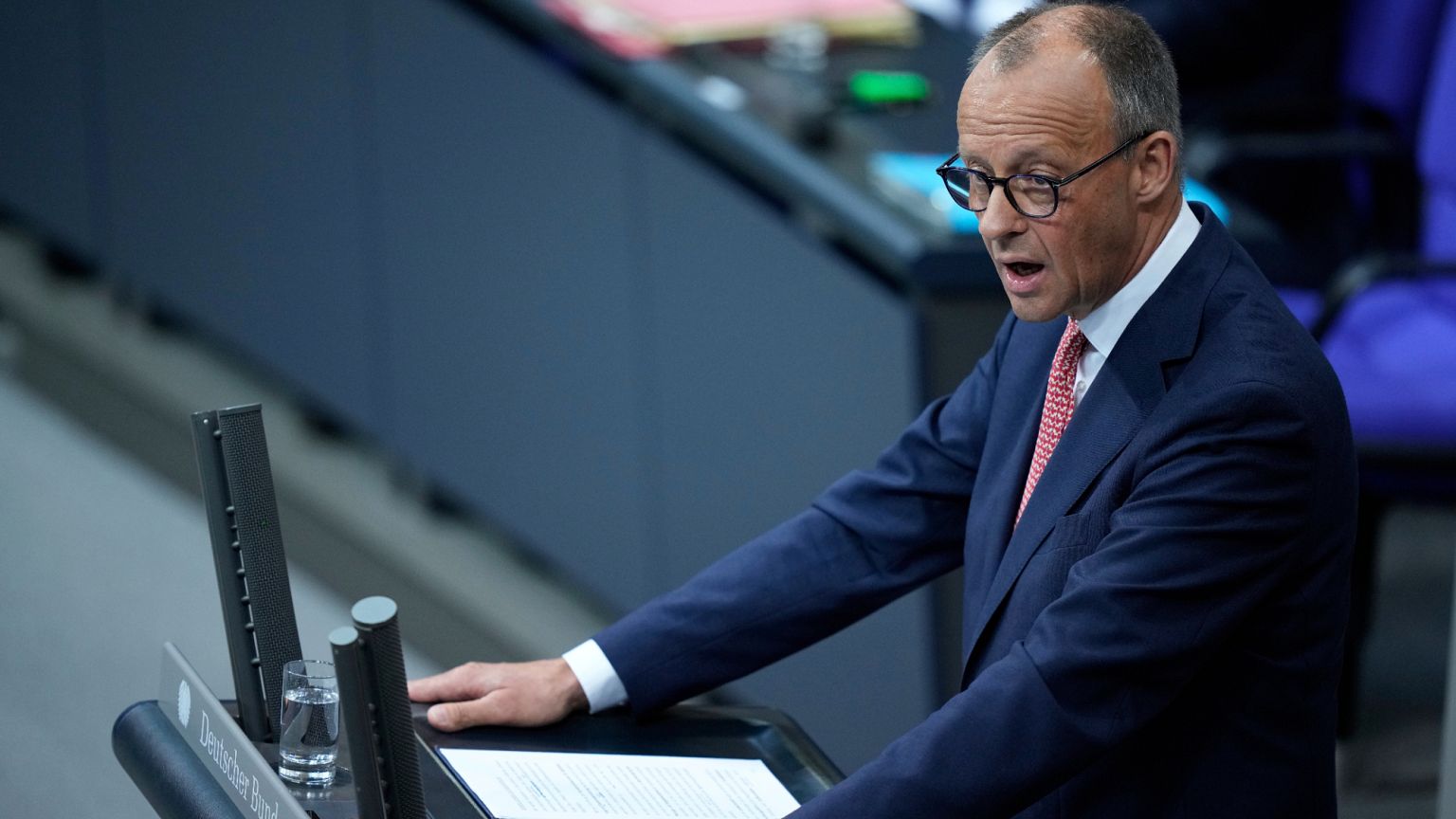
Germany’s chancellor Friedrich Merz said he was “cautiously optimistic” that the European Union would secure a trade deal with the US within the next few days, or “by the end of the month at the latest”.
Merz also told lawmakers in the Bundestag on Wednesday: “I myself am also in close contact with the American government, with the president and the European Commission.”
Merz said that the aim is to reach an agreement “as quickly as possible that links mutual trade between the US and the European Union with the lowest possible tariffs”.
As President Trump’s pause to so-called “reciprocal tariffs” is set to end on 1 August, the US administration has started to send out letters to trading partners, notifying them of the duties that will be applied to their US exports.
So far, Washington has only secured trade frameworks with the UK, Vietnam, and China. Over a dozen other countries have received letters outlining tariff rates, including South Africa, South Korea and Japan. The EU has yet to sign a trade framework with the US or receive a letter.
President Trump said on Tuesday that the administration “can make a lot more deals” but claimed: “It’s just too time-consuming. It just makes it more complicated. And we can do things over the years, too.” Trump was defending his use of letters over more traditional negotiation processes.
The US president had threatened a duty as high as 50% on EU goods sent to the US, although it now appears that Brussels will be faced with a 10% tariff.
Separate from so-called “retaliatory” duties, the EU is also facing a 25% tariff on automobiles and car parts sent to the US, as well as a 50% tariff on steel and aluminium exports. The two sides are now looking for carve-outs to alleviate the impact on certain industries.
Duties on goods sent to the US are set to hit Germany hard as the US remains the most important destination for German exports.
The economy is also struggling to find its feet after Europe’s energy price spike and the COVID-19 pandemic, hindered by ageing infrastructure, excessive bureaucracy, and low productivity.
In contrast to his tone when referring to the UK, Trump has been more hostile towards the EU during the negotiation process. He notably labelled the bloc as "nasty" and claimed that it was formed to "screw the United States".
The EU is working to avoid a tariff rate as high as 50% ahead of a 1 August deadline. It now appears that a 10% duty is on the table.
EU đang nỗ lực để tránh mức thuế quan cao tới 50% trước thời hạn 1 tháng 8. Hiện tại có vẻ như mức thuế 10% đang được cân nhắc
Germany’s chancellor Friedrich Merz said he was “cautiously optimistic” that the European Union would secure a trade deal with the US within the next few days, or “by the end of the month at the latest”.
Thủ tướng Đức Friedrich Merz cho biết ông "lạc quan thận trọng" rằng Liên minh châu Âu sẽ đạt được thỏa thuận thương mại với Hoa Kỳ trong vài ngày tới hoặc "muộn nhất là vào cuối tháng này".
Merz also told lawmakers in the Bundestag on Wednesday: “I myself am also in close contact with the American government, with the president and the European Commission.”
Merz cũng nói với các nhà lập pháp tại Bundestag vào thứ Tư: “Bản thân tôi cũng đang liên lạc chặt chẽ với chính phủ Hoa Kỳ, với tổng thống và Ủy ban Châu Âu.”
Merz said that the aim is to reach an agreement “as quickly as possible that links mutual trade between the US and the European Union with the lowest possible tariffs”.
Merz cho biết mục tiêu là đạt được một thỏa thuận “nhanh nhất có thể nhằm liên kết hoạt động thương mại song phương giữa Hoa Kỳ và Liên minh châu Âu với mức thuế quan thấp nhất có thể”.
As President Trump’s pause to so-called “reciprocal tariffs” is set to end on 1 August, the US administration has started to send out letters to trading partners, notifying them of the duties that will be applied to their US exports.
Khi lệnh tạm dừng áp dụng cái gọi là "thuế quan qua lại" của Tổng thống Trump sắp kết thúc vào ngày 1 tháng 8, chính quyền Hoa Kỳ đã bắt đầu gửi thư cho các đối tác thương mại, thông báo cho họ về mức thuế sẽ áp dụng cho hàng xuất khẩu của họ sang Hoa Kỳ.
So far, Washington has only secured trade frameworks with the UK, Vietnam, and China. Over a dozen other countries have received letters outlining tariff rates, including South Africa, South Korea and Japan. The EU has yet to sign a trade framework with the US or receive a letter.
Cho đến nay, Washington chỉ bảo đảm được các khuôn khổ thương mại với Anh, Việt Nam và Trung Quốc. Hơn một chục quốc gia khác đã nhận được thư nêu rõ mức thuế quan, bao gồm Nam Phi, Hàn Quốc và Nhật Bản. EU vẫn chưa ký một khuôn khổ thương mại với Hoa Kỳ hoặc nhận được thư.
President Trump said on Tuesday that the administration “can make a lot more deals” but claimed: “It’s just too time-consuming. It just makes it more complicated. And we can do things over the years, too.” Trump was defending his use of letters over more traditional negotiation processes.
Tổng thống Trump cho biết hôm thứ Ba rằng chính quyền "có thể thực hiện nhiều thỏa thuận hơn" nhưng tuyên bố: "Chỉ là quá tốn thời gian. Nó chỉ làm cho mọi thứ phức tạp hơn. Và chúng ta cũng có thể làm mọi thứ trong nhiều năm". Trump đã bảo vệ việc sử dụng các lá thư thay vì các quy trình đàm phán truyền thống hơn.
The US president had threatened a duty as high as 50% on EU goods sent to the US, although it now appears that Brussels will be faced with a 10% tariff.
Tổng thống Hoa Kỳ đã đe dọa sẽ áp mức thuế cao tới 50% đối với hàng hóa EU xuất khẩu sang Hoa Kỳ, mặc dù hiện tại có vẻ như Brussels sẽ phải đối mặt với mức thuế 10%.
Separate from so-called “retaliatory” duties, the EU is also facing a 25% tariff on automobiles and car parts sent to the US, as well as a 50% tariff on steel and aluminium exports. The two sides are now looking for carve-outs to alleviate the impact on certain industries.
Ngoài cái gọi là thuế “trả đũa”, EU cũng phải đối mặt với mức thuế 25% đối với ô tô và phụ tùng ô tô xuất khẩu sang Hoa Kỳ, cũng như mức thuế 50% đối với thép và nhôm xuất khẩu. Hai bên hiện đang tìm kiếm các biện pháp khắc phục để giảm bớt tác động đối với một số ngành công nghiệp nhất định.
Duties on goods sent to the US are set to hit Germany hard as the US remains the most important destination for German exports.
The economy is also struggling to find its feet after Europe’s energy price spike and the COVID-19 pandemic, hindered by ageing infrastructure, excessive bureaucracy, and low productivity.
Thuế đối với hàng hóa gửi đến Hoa Kỳ sẽ ảnh hưởng nặng nề đến Đức vì Hoa Kỳ vẫn là điểm đến quan trọng nhất đối với hàng xuất khẩu của Đức.
Nền kinh tế cũng đang vật lộn để tìm chỗ đứng sau đợt tăng giá năng lượng của châu Âu và đại dịch COVID-19, bị cản trở bởi cơ sở hạ tầng cũ kỹ, bộ máy quan liêu quá mức và năng suất thấp.
In contrast to his tone when referring to the UK, Trump has been more hostile towards the EU during the negotiation process. He notably labelled the bloc as "nasty" and claimed that it was formed to "screw the United States".
Trái ngược với giọng điệu của ông khi nhắc đến Vương quốc Anh, Trump đã tỏ ra thù địch hơn với EU trong quá trình đàm phán. Ông đặc biệt gọi khối này là "ghê tởm" và tuyên bố rằng khối này được thành lập để "làm hại Hoa Kỳ".


Nhận xét
Đăng nhận xét