30 days/16: Poll: Do EU citizens back more defence spending?
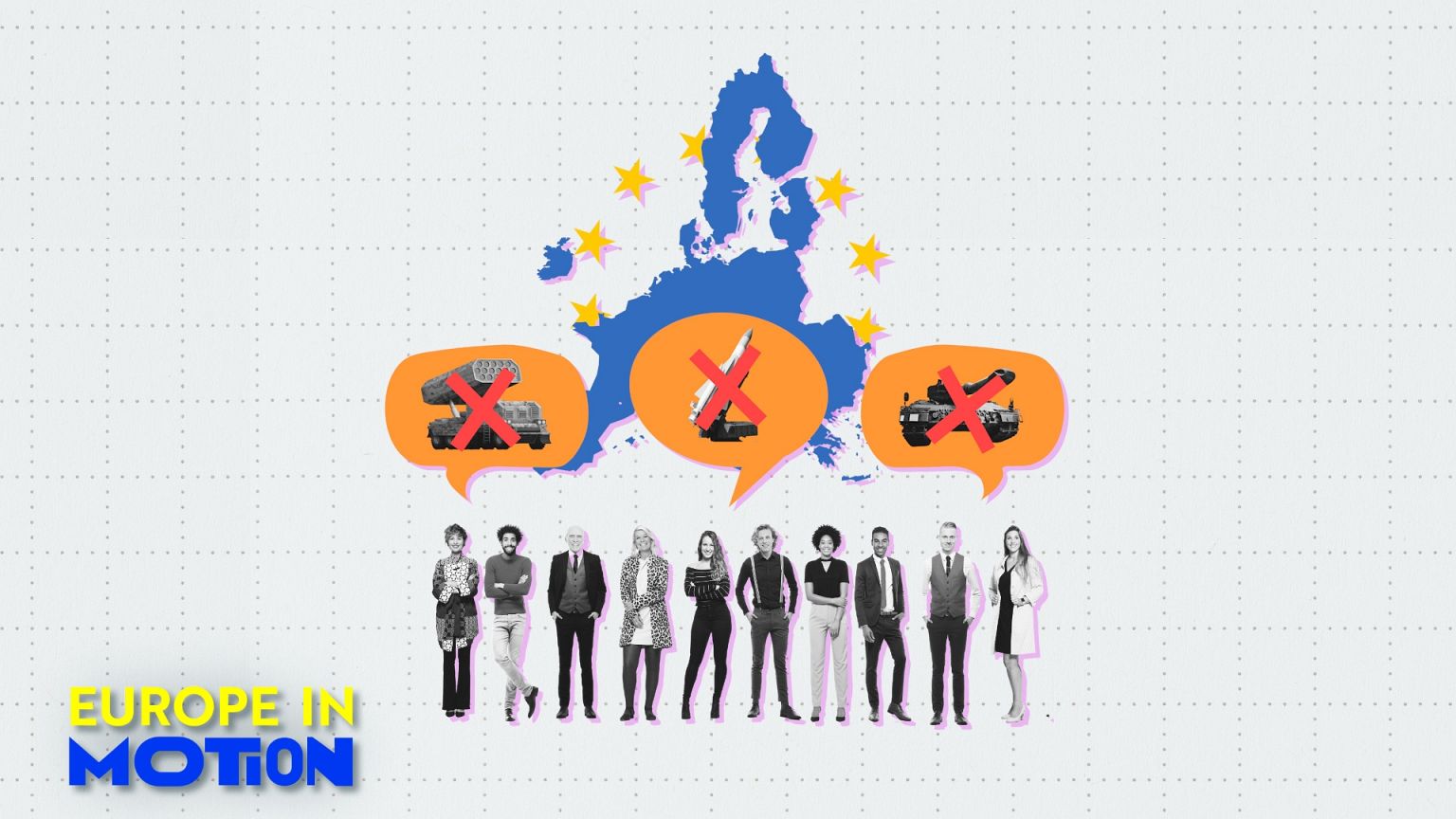
European leaders seem to be failing to get the message across, as EU citizens rank defence only seventh out of 10 investment priorities.
Calls from the European Union and NATO for increased military spending aren't exactly resonating among the EU public.
A recent Eurobarometer poll showed EU citizens are not exactly eager to spend money on defence, despite growing warnings from NATO and the EU about the risk of future conflicts.
Fewer than one in four people (23%) want the EU to use its funds for military purposes.
Which countries show the least support for military spending?
A recent joint report by Bruegel and the Kiel Institute claimed that a new Russian aggression is "conceivable", citing NATO claims that Moscow might be "ready to attack within three to ten years".
Yet, defence capabilities and infrastructure rank only seventh out of 10 proposed areas of investment in the Eurobarometer poll.
Furthermore, public opinion seems deeply fractured across the bloc.
Unsurprisingly, support for more defence spending is highest among Russia's close neighbours: 50% in Estonia and 46% in both Finland and Lithuania.
On the other hand, backing is much lower in countries like Italy (12%), Bulgaria (13%), Spain (17%), Ireland (15%), Slovenia and Hungary (14%).
'Too many leaders playing scare tactics'
Daniel Fiott, head of defence at Brussels' Centre for Security, Diplomacy and Strategy (CSDS), explains why leaders are failing to get the message across.
"You cannot convince people living in western and southern Europe that Russian troops will be landing in their capital cities anytime soon; yet, we know that in many frontline states in eastern and central Europe, this is precisely the fear for citizens."
"So, the messaging for individual countries needs to be tailored. As of now, too many leaders are playing scare tactics with the public — this will not work," Fiott added.
Current global economic turbulence isn't helping to drive more support, he says.
"I strongly support more defence spending in Europe, but the NATO 5% spending target can be achieved in a context where the US is imposing tariffs on the EU and where the global economy is sputtering, is unclear to me."
"Although a short-sighted view, many citizens in Europe will not want to spend more on defence because they automatically fear that other public services will suffer."
More houses, fewer tourists: Europeans' top priorities
Instead of defence, respondents point to areas like health and education as top priorities (49%), followed by climate action and environment protection (38%).
Denmark is the most climate-concerned country (58%), before Malta (56%) and Italy (46%).
Job creation is the third most pressing issue (31%) across the bloc, particularly in Romania, Greece and Lithuania.
These areas are followed by housing (27%), which appears particularly problematic in central Europe, as Hungary, Poland, and Slovenia show the highest rates (35%) after Cyprus (40%) of people wanting the EU to place funds on it.
On the other hand, amid growing pressure from mass travel, tourism, and cultural heritage received the least support for public investment (12%).
Source:https://www.euronews.com/my-europe/2025/07/17/are-eu-citizens-on-board-with-higher-defence-spending
Vocabulary:
priority/praɪˈɒrəti/ something that you think is more important than other things and should be dealt with first
military /ˈmɪlətri/ connected with soldiers or the armed forces
eager /ˈiːɡə(r)/ very interested and excited by something that is going to happen or about something that you want to do; showing this.
aggression /əˈɡreʃn/ feelings of anger and hate that may result in threatening or violent behaviour
conceivable /kənˈsiːvəbl/ that you can imagine or believe
capabilitie /ˌkeɪpəˈbɪləti/ the ability or qualities necessary to do something
proposed /prəˈpəʊz/ to suggest a plan, an idea, etc. for people to think about and decide on
scare /skeə(r)/ to frighten somebody
tactics /ˈtæktɪk /
western /ˈwestən/ Western located in the west or facing west
troop /truːp/ soldiers, especially in large groups
frontline /ˈfrʌntlaɪn/ in the most important or dangerous position; doing essential work that puts you at risk
precisely /prɪˈsaɪsli/
tailored /ˈteɪləd/ made to fit well or closely
turbulence /ˈtɜːbjələns/ a situation in which there is a lot of sudden change, trouble, argument and sometimes violence
sputter /ˈspʌtə(r)/ if an engine, a lamp or a fire sputters, it makes a series of short explosive sounds
sighted /ˈsaɪtɪd/ able to see; not blind
pressing /ˈpresɪŋ/
heritage /ˈherɪtɪdʒ/ the history, traditions, buildings and objects that a country or society has had for many years and that are considered an important part of its character
Translate:
European leaders seem to be failing to get the message across, as EU citizens rank defence only seventh out of 10 investment priorities.
Các nhà lãnh đạo châu Âu dường như không truyền tải được thông điệp này khi công dân EU chỉ xếp hạng quốc phòng ở vị trí thứ 7 trong số 10 ưu tiên đầu tư.
Calls from the European Union and NATO for increased military spending aren't exactly resonating among the EU public.
Lời kêu gọi tăng chi tiêu quân sự từ Liên minh châu Âu và NATO không thực sự được người dân EU đồng tình.
A recent Eurobarometer poll showed EU citizens are not exactly eager to spend money on defence, despite growing warnings from NATO and the EU about the risk of future conflicts.
Một cuộc thăm dò gần đây của Eurobarometer cho thấy người dân EU không thực sự muốn chi tiền cho quốc phòng, bất chấp những cảnh báo ngày càng tăng từ NATO và EU về nguy cơ xung đột trong tương lai.
Fewer than one in four people (23%) want the EU to use its funds for military purposes.
Ít hơn một phần tư số người (23%) muốn EU sử dụng tiền của mình cho mục đích quân sự.
Which countries show the least support for military spending?
A recent joint report by Bruegel and the Kiel Institute claimed that a new Russian aggression is "conceivable", citing NATO claims that Moscow might be "ready to attack within three to ten years".
Những quốc gia nào ít ủng hộ chi tiêu quân sự nhất?
Một báo cáo chung gần đây của Bruegel và Viện Kiel cho rằng một cuộc xâm lược mới của Nga là "có thể xảy ra", trích dẫn tuyên bố của NATO rằng Moscow có thể "sẵn sàng tấn công trong vòng ba đến mười năm".
Yet, defence capabilities and infrastructure rank only seventh out of 10 proposed areas of investment in the Eurobarometer poll.
Tuy nhiên, năng lực quốc phòng và cơ sở hạ tầng chỉ đứng thứ bảy trong số 10 lĩnh vực đầu tư được đề xuất trong cuộc thăm dò của Eurobarometer.
Furthermore, public opinion seems deeply fractured across the bloc.
Unsurprisingly, support for more defence spending is highest among Russia's close neighbours: 50% in Estonia and 46% in both Finland and Lithuania.
Hơn nữa, dư luận dường như bị chia rẽ sâu sắc trên khắp khối.
Không có gì ngạc nhiên khi tỷ lệ ủng hộ tăng chi tiêu quốc phòng cao nhất nằm ở các nước láng giềng gần gũi của Nga: 50% ở Estonia và 46% ở cả Phần Lan và Litva.
On the other hand, backing is much lower in countries like Italy (12%), Bulgaria (13%), Spain (17%), Ireland (15%), Slovenia and Hungary (14%).
Mặt khác, sự ủng hộ thấp hơn nhiều ở các quốc gia như Ý (12%), Bulgaria (13%), Tây Ban Nha (17%), Ireland (15%), Slovenia và Hungary (14%).
'Too many leaders playing scare tactics'
Daniel Fiott, head of defence at Brussels' Centre for Security, Diplomacy and Strategy (CSDS), explains why leaders are failing to get the message across.
'Quá nhiều nhà lãnh đạo dùng chiến thuật hù dọa'
Daniel Fiott, người đứng đầu bộ phận quốc phòng tại Trung tâm An ninh, Ngoại giao và Chiến lược (CSDS) của Brussels, giải thích lý do tại sao các nhà lãnh đạo không truyền tải được thông điệp.
"You cannot convince people living in western and southern Europe that Russian troops will be landing in their capital cities anytime soon; yet, we know that in many frontline states in eastern and central Europe, this is precisely the fear for citizens."
"Bạn không thể thuyết phục người dân sống ở Tây và Nam Âu rằng quân đội Nga sẽ sớm đổ bộ vào thủ đô của họ; tuy nhiên, chúng ta biết rằng ở nhiều quốc gia tiền tuyến ở Đông và Trung Âu, đây chính xác là nỗi sợ hãi của người dân."
"So, the messaging for individual countries needs to be tailored. As of now, too many leaders are playing scare tactics with the public — this will not work," Fiott added.
"So, the messaging for individual countries needs to be tailored. As of now, too many leaders are playing scare tactics with the public — this will not work," Fiott added.
Current global economic turbulence isn't helping to drive more support, he says.
"I strongly support more defence spending in Europe, but the NATO 5% spending target can be achieved in a context where the US is imposing tariffs on the EU and where the global economy is sputtering, is unclear to me."
Ông cho biết tình hình kinh tế toàn cầu bất ổn hiện nay không giúp thúc đẩy sự ủng hộ nhiều hơn.
"Tôi hoàn toàn ủng hộ việc tăng chi tiêu quốc phòng ở châu Âu, nhưng mục tiêu chi tiêu 5% của NATO có thể đạt được trong bối cảnh Hoa Kỳ đang áp đặt thuế quan lên EU và nền kinh tế toàn cầu đang trì trệ, tôi vẫn chưa rõ."
"Although a short-sighted view, many citizens in Europe will not want to spend more on defence because they automatically fear that other public services will suffer."
"Mặc dù có tầm nhìn hạn hẹp, nhưng nhiều công dân ở châu Âu sẽ không muốn chi nhiều hơn cho quốc phòng vì họ tự động lo sợ rằng các dịch vụ công khác sẽ bị ảnh hưởng."
More houses, fewer tourists: Europeans' top priorities
Instead of defence, respondents point to areas like health and education as top priorities (49%), followed by climate action and environment protection (38%).
Nhiều nhà hơn, ít khách du lịch hơn: Ưu tiên hàng đầu của người châu Âu
Thay vì quốc phòng, những người được hỏi cho rằng các lĩnh vực như y tế và giáo dục là ưu tiên hàng đầu (49%), tiếp theo là hành động vì khí hậu và bảo vệ môi trường (38%).
Denmark is the most climate-concerned country (58%), before Malta (56%) and Italy (46%).
Job creation is the third most pressing issue (31%) across the bloc, particularly in Romania, Greece and Lithuania.
Đan Mạch là quốc gia quan tâm nhất đến khí hậu (58%), tiếp theo là Malta (56%) và Ý (46%).
Tạo việc làm là vấn đề cấp bách thứ ba (31%) trên toàn khối, đặc biệt là ở Romania, Hy Lạp và Litva.
These areas are followed by housing (27%), which appears particularly problematic in central Europe, as Hungary, Poland, and Slovenia show the highest rates (35%) after Cyprus (40%) of people wanting the EU to place funds on it.
Tiếp theo là lĩnh vực nhà ở (27%), điều này đặc biệt có vấn đề ở Trung Âu, vì Hungary, Ba Lan và Slovenia có tỷ lệ người dân muốn EU đầu tư tiền vào lĩnh vực này cao nhất (35%) sau Síp (40%).
On the other hand, amid growing pressure from mass travel, tourism, and cultural heritage received the least support for public investment (12%).
Mặt khác, trong bối cảnh áp lực ngày càng tăng từ du lịch đại chúng, du lịch và di sản văn hóa nhận được ít sự ủng hộ nhất cho đầu tư công (12%).


Nhận xét
Đăng nhận xét