30 Days/19(2): Which European economy stands to suffer the most from US tariffs?
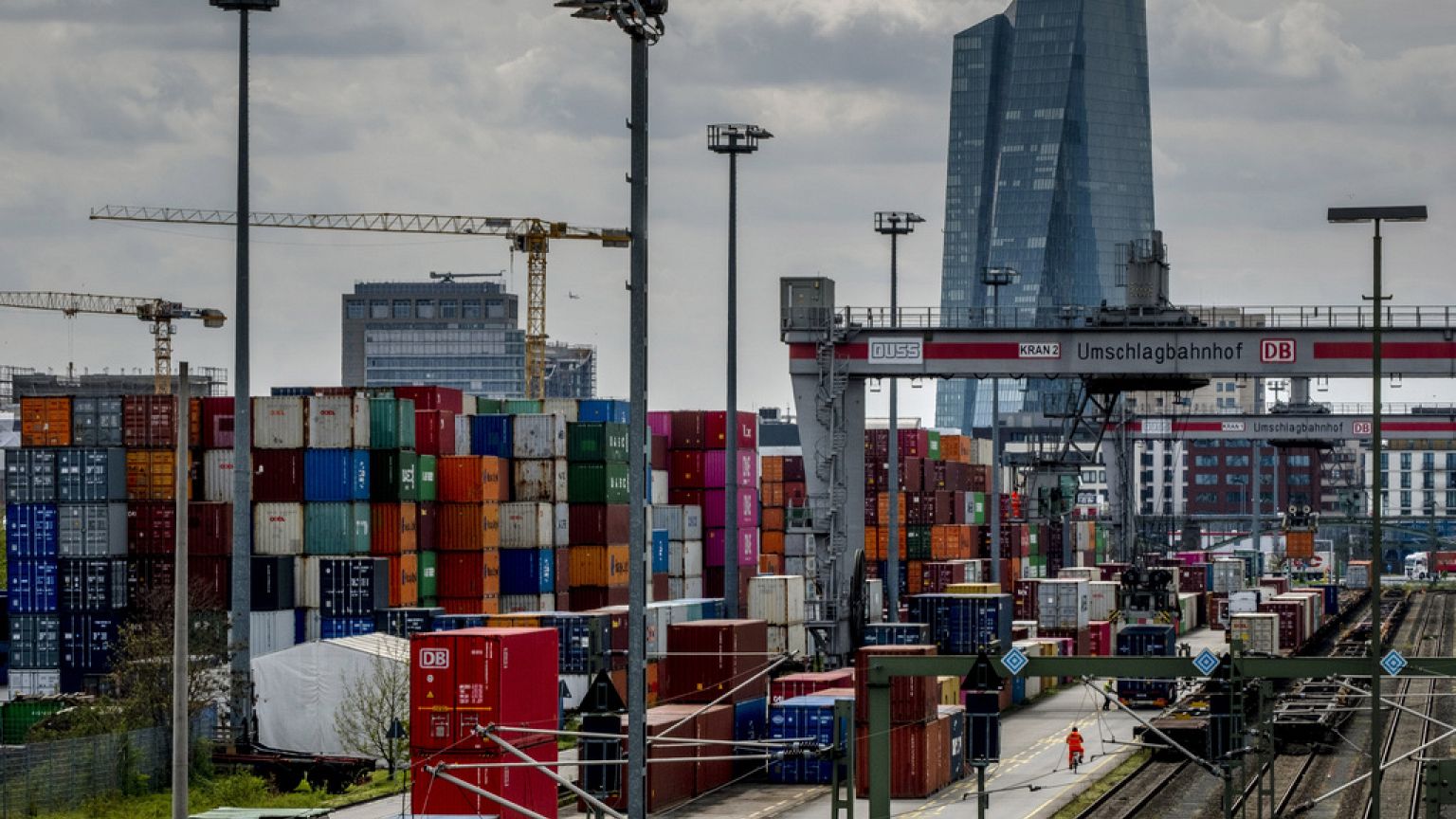
One-fifth of the EU’s exports are heading to the US. Tariffs on the carmaking sector hit the German economy the most, but potential tariffs on the pharmaceutical one could cost substantially to the Irish economy.
Germany and Ireland are standing out as the two most exposed EU economies threatened by higher US tariffs, as Brussels works towards a trade deal with Washington, amid reports that pharmaceutical tariffs could be as high as 200%.
When US President Donald Trump imposed a new 25% tariff on auto imports and car parts in April, Germany was identified as the EU country with the most to lose. Brussels-based think tank Bruegel’s estimation at the time was that tariffs could cost 0.4% of the country’s GDP in the long term.
While awaiting a new EU-US trade deal, other details emerge that could put Ireland, Denmark, and Belgium, as well as other countries, in the crosshairs should Washington target the pharmaceutical sector next.
Countries with the largest exposure to the US market
The overall impact on the European economy will depend on the actual tariff rate the US settles on and the EU’s response, but the blow will not be spread evenly.
According to Bruegel, the EU economy is facing significant but manageable macroeconomic consequences.
They estimated in a report in April that, regarding the possible scenarios, the damage could be approximately 0.3% of the EU’s GDP, depending on the outcome of the negotiations. This compares to the 1.1% real GDP growth expected in the bloc in 2025, by the European Commission’s Spring Forecast.
Trade with the US is significant. In 2024, the United States was the largest partner for EU exports of goods, making up 20.6% of all EU goods exports outside the bloc.
Pharmaceuticals account for 15% of the EU’s goods exports to the US. They are followed by the auto sector.
Until there is more clarification on potential US tariffs on the pharma sector’s products, “the auto sector seems to be the most vulnerable to US tariffs as there doesn’t seem to be any major exemptions planned,” said Savary. The industry has been slapped with a 25% tariff in April.
“Tariffs alone could shave around 8% off total EU trade volumes over the next five years,” said Rory Fennessy, Senior Economist at Oxford Economics, in a recent report.
Countries with the highest value in goods exports to the US, facing the biggest threat to their economies, include Germany, Ireland, Italy, France and the Netherlands.
The German economy relies heavily on exports, boosted by the country’s motor vehicle sector. Nearly one-quarter (22.7%) of the total German exports are heading to the US.
“Germany stands out as the major European economy likely to be hit hardest by US tariffs, and we expect GDP growth to slump in the second and third quarters," Andrew Hunter, Associate Director and Senior Economist at Moody’s Ratings, said to Euronews Business.
Hunter also added that smaller economies, including Austria and others in central and eastern Europe, “which are heavily integrated into Germany’s industrial supply chains, will also be hit hard”.
According to Bruegel, after 2025, the long-term negative impact of the tariffs could be around 0.4% of the GDP in Germany, once “the effect has fully built up and initial short-term effects dissipated,” said Niclas Frederic Poitiers, Research Fellow at Bruegel. “For France, the average effect would be around 0.25% of GDP.”
Uncertainty could lead to lost investments and jobs across the entire 27-member bloc. Hunter said that, “even for those countries where direct exposure to US exports is relatively limited, such as France or Spain, growth is still likely to be weighed down by global weakness and uncertainty.
Regarding long-term impacts, Ireland stands out as one of the most affected countries, as more than half of its goods exports (53.7%) are directed towards the US market.
A lot depends on whether the pharmaceutical sector will be hit with tariffs. If so, “Ireland will be the EU economy most at risk from these tariffs,” said Mathieu Savary, chief strategist for our European Investment Strategy at BCA Research.
How pharma tariffs could hit the European economy in particular
The research-based pharmaceutical industry is a key asset of the European economy. It is one of Europe’s top-performing high-technology sectors.
It contributed €311 billion in gross value added (GVA) and 2.3 million jobs directly and indirectly to the European Union’s economy in 2022, according to a recent study by PWC.
And the US market is crucial to the European pharma sector. According to the European Federation of Pharmaceutical Industries and Associations, in 2021, North America accounted for 49.1% of world pharmaceutical sales compared with 23.4% for Europe.
And more than one-third of EU pharma exports are going to the US.
If the pharma sector is hit by a 25% tariff, as it is expected by Moody’s in the coming months, “most exposed would be a number of smaller European economies like Denmark, Belgium, Slovenia and Ireland, which are generally where we think the risks of recession in Europe are highest,” Hunter said.
BCA Research’s chief strategist added that in this case, “Ireland is particularly exposed to this risk,” citing that exports to the US represent 18% of Ireland’s GDP, and pharma exports represent nearly 55% of Irish exports. According to BCA, the impact “could curtail 4% to 5% to growth over time”.
Bruegel estimated that Ireland's cumulative real GDP loss could be 3% by 2028.
The think tank also singled out the country as the most vulnerable regarding the impact of the US tariffs on employment.
Regarding how vulnerable a country is to job losses in light of US tariffs, Bruegel said that Italy was the second most-exposed country, with a high exposure in transport equipment and a high level of exposed employment in fashion and car manufacturing. Italy would also have high exposure in pharmaceuticals.
Would there be a 200% tariff on pharma products?
Trump said on Tuesday that pharmaceutical products imported to the US are facing a 200% tariff, without disclosing any further details.
According to BCA’s Savary, it is not likely, because “that would massively increase the cost of healthcare for US consumers, which is already a major issue for voters.”
He sees it as a “strong message to foreign pharma companies to adjust their pricing down and invest into producing their drugs in the US.” Savary expects “that FDIs into the US and drug prices reduction announcements will be the end result of these talks and threats”.
“The pressure is now on for drug companies to expand US production facilities so they are effectively on the doorstep of American customers,” said Dan Coatsworth, investment analyst at AJ Bell.
Vocabulary:
economy /ɪˈkɒnəmi/ the relationship between production, trade and the supply of money in a particular country or region
terminal /ˈtɜːmɪnl/ a building or set of buildings at an airport where passengers arrive and leave.
pile /paɪl/ a number of things that have been placed on top of each other
carmaking
sector /ˈsektə(r)/ a part of an area of activity, especially of a country’s economy
amid /əˈmɪd/ in the middle of or during something, especially something that causes excitement or fear
impose /ɪmˈpəʊz/ to introduce a new law, rule, tax, etc.; to order that a rule, punishment, etc. be used
import /ˈɪmpɔːt/ a product or service that is brought into one country from another
await /əˈweɪt/ await somebody/something to wait for somebody/something
emerge /ɪˈmɜːdʒ/ to move out of or away from something and become possible to see
crosshair /ˈkrɒs heəz/ a pair of very thin wires in the shape of a cross that you see when you look through a gunsight, microscope, etc.
exposure /ɪkˈspəʊʒə(r)/ exposure (to something) the state of being in a place or situation where there is no protection from something harmful or unpleasant
bruegel
manageable /ˈmænɪdʒəbl/ possible to deal with or control
macroeconomic /ˌmækrəʊˌiːkəˈnɒmɪk/ connected with large economic systems, such as those of whole countries or areas of the world
consequences /ˈkɒnsɪkwənsɪz/
scenario /səˈnɑːriəʊ/ a description of how things might happen in the future
negotiation /nɪˌɡəʊʃiˈeɪʃn/ formal discussion between people who are trying to reach an agreement
export /ˈekspɔːt/ the selling and transporting of goods to another country
clarification /ˌklærəfɪˈkeɪʃn/ the act or process of making something clearer or easier to understand
vulnerable /ˈvʌlnərəbl/ vulnerable (to somebody/something) weak and easily hurt physically or emotionally
exemption /ɪɡˈzempʃn/ exemption (from something) official permission not to do something or pay something that you would normally have to do or pay
slap /slæp/ slap somebody/something (+ adv./prep.) to hit somebody/something with the flat part of your hand
relies, rely /rɪˈlaɪ/
boost /buːst/ boost something to make something increase, or become better or more successful
slump /slʌmp/ to fall in price, value, number, etc., suddenly and by a large amount
quarter /ˈkwɔːtə(r)/
associate /əˈsəʊsieɪt/ to make a connection between people or things in your mind
initial /ɪˈnɪʃl/ happening at the beginning; first
dissipated /ˈdɪsɪpeɪtɪd/ enjoying activities that are harmful such as drinking too much alcohol
asset /ˈæset/ a person or thing that is valuable or useful to somebody/something
crucial /ˈkruːʃl/ extremely important, because it will affect other things
disclose /dɪsˈkləʊz/ to give somebody information about something, especially something that was previously secret.
Translate:
One-fifth of the EU’s exports are heading to the US. Tariffs on the carmaking sector hit the German economy the most, but potential tariffs on the pharmaceutical one could cost substantially to the Irish economy.
Một phần năm kim ngạch xuất khẩu của EU đang hướng đến Hoa Kỳ. Thuế quan đối với ngành sản xuất ô tô ảnh hưởng nặng nề nhất đến nền kinh tế Đức, nhưng thuế quan tiềm tàng đối với ngành dược phẩm có thể gây thiệt hại đáng kể cho nền kinh tế Ireland.
Germany and Ireland are standing out as the two most exposed EU economies threatened by higher US tariffs, as Brussels works towards a trade deal with Washington, amid reports that pharmaceutical tariffs could be as high as 200%.
Đức và Ireland nổi lên là hai nền kinh tế EU dễ bị tổn thương nhất do bị đe dọa tăng thuế quan từ Hoa Kỳ, trong bối cảnh Brussels đang nỗ lực hướng tới một thỏa thuận thương mại với Washington, trong bối cảnh có thông tin cho rằng thuế quan dược phẩm có thể lên tới 200%.
When US President Donald Trump imposed a new 25% tariff on auto imports and car parts in April, Germany was identified as the EU country with the most to lose. Brussels-based think tank Bruegel’s estimation at the time was that tariffs could cost 0.4% of the country’s GDP in the long term.
Khi Tổng thống Mỹ Donald Trump áp đặt mức thuế mới 25% đối với ô tô nhập khẩu và phụ tùng ô tô vào tháng 4, Đức được xác định là quốc gia EU chịu thiệt hại nặng nề nhất. Viện nghiên cứu Bruegel có trụ sở tại Brussels ước tính vào thời điểm đó rằng thuế quan có thể khiến GDP của Đức giảm 0,4% trong dài hạn.
While awaiting a new EU-US trade deal, other details emerge that could put Ireland, Denmark, and Belgium, as well as other countries, in the crosshairs should Washington target the pharmaceutical sector next.
Trong khi chờ đợi một thỏa thuận thương mại mới giữa EU và Hoa Kỳ, các chi tiết khác xuất hiện có thể khiến Ireland, Đan Mạch và Bỉ, cũng như các quốc gia khác, trở thành mục tiêu nếu Washington nhắm mục tiêu vào lĩnh vực dược phẩm.
Countries with the largest exposure to the US market
The overall impact on the European economy will depend on the actual tariff rate the US settles on and the EU’s response, but the blow will not be spread evenly.
Các quốc gia có mức độ tiếp xúc lớn nhất với thị trường Hoa Kỳ
Tác động chung lên nền kinh tế châu Âu sẽ phụ thuộc vào mức thuế quan thực tế mà Hoa Kỳ áp dụng và phản ứng của EU, nhưng tác động sẽ không đồng đều.
According to Bruegel, the EU economy is facing significant but manageable macroeconomic consequences.
Theo Bruegel, nền kinh tế EU đang phải đối mặt với những hậu quả kinh tế vĩ mô đáng kể nhưng có thể kiểm soát được.
They estimated in a report in April that, regarding the possible scenarios, the damage could be approximately 0.3% of the EU’s GDP, depending on the outcome of the negotiations. This compares to the 1.1% real GDP growth expected in the bloc in 2025, by the European Commission’s Spring Forecast.
Trong một báo cáo hồi tháng 4, họ ước tính rằng, xét về các kịch bản có thể xảy ra, thiệt hại có thể lên tới khoảng 0,3% GDP của EU, tùy thuộc vào kết quả đàm phán. Con số này thấp hơn nhiều so với mức tăng trưởng GDP thực tế 1,1% dự kiến của khối vào năm 2025, theo Dự báo Mùa xuân của Ủy ban Châu Âu.
Trade with the US is significant. In 2024, the United States was the largest partner for EU exports of goods, making up 20.6% of all EU goods exports outside the bloc.
Hoạt động thương mại với Hoa Kỳ rất đáng kể. Năm 2024, Hoa Kỳ là đối tác xuất khẩu hàng hóa lớn nhất của EU, chiếm 20,6% tổng kim ngạch xuất khẩu hàng hóa của EU ra bên ngoài khối.
Pharmaceuticals account for 15% of the EU’s goods exports to the US. They are followed by the auto sector.
Dược phẩm chiếm 15% kim ngạch xuất khẩu hàng hóa của EU sang Hoa Kỳ. Tiếp theo là ngành ô tô.
Until there is more clarification on potential US tariffs on the pharma sector’s products, “the auto sector seems to be the most vulnerable to US tariffs as there doesn’t seem to be any major exemptions planned,” said Savary. The industry has been slapped with a 25% tariff in April.
Cho đến khi có thêm thông tin rõ ràng về khả năng áp thuế của Hoa Kỳ đối với các sản phẩm dược phẩm, "ngành ô tô dường như là ngành dễ bị tổn thương nhất trước thuế quan của Hoa Kỳ vì dường như không có bất kỳ miễn trừ lớn nào được lên kế hoạch", ông Savary nói. Ngành công nghiệp này đã bị áp thuế 25% vào tháng 4.
“Tariffs alone could shave around 8% off total EU trade volumes over the next five years,” said Rory Fennessy, Senior Economist at Oxford Economics, in a recent report.
Rory Fennessy, Chuyên gia kinh tế cấp cao tại Oxford Economics, cho biết trong một báo cáo gần đây rằng: "Chỉ riêng thuế quan có thể làm giảm khoảng 8% tổng khối lượng thương mại của EU trong năm năm tới".
Countries with the highest value in goods exports to the US, facing the biggest threat to their economies, include Germany, Ireland, Italy, France and the Netherlands.
Các quốc gia có giá trị xuất khẩu hàng hóa cao nhất sang Hoa Kỳ đang phải đối mặt với mối đe dọa lớn nhất đối với nền kinh tế của họ, bao gồm Đức, Ireland, Ý, Pháp và Hà Lan.
The German economy relies heavily on exports, boosted by the country’s motor vehicle sector. Nearly one-quarter (22.7%) of the total German exports are heading to the US.
Nền kinh tế Đức phụ thuộc rất nhiều vào xuất khẩu, được thúc đẩy bởi ngành công nghiệp ô tô. Gần một phần tư (22,7%) tổng kim ngạch xuất khẩu của Đức đang hướng đến Hoa Kỳ.
“Germany stands out as the major European economy likely to be hit hardest by US tariffs, and we expect GDP growth to slump in the second and third quarters," Andrew Hunter, Associate Director and Senior Economist at Moody’s Ratings, said to Euronews Business.
Andrew Hunter, Phó giám đốc kiêm Chuyên gia kinh tế cấp cao tại Moody’s Ratings, phát biểu với Euronews Business: "Đức nổi lên là nền kinh tế lớn của châu Âu có khả năng bị ảnh hưởng nặng nề nhất bởi thuế quan của Hoa Kỳ và chúng tôi dự kiến tăng trưởng GDP sẽ giảm trong quý 2 và quý 3".
Hunter also added that smaller economies, including Austria and others in central and eastern Europe, “which are heavily integrated into Germany’s industrial supply chains, will also be hit hard”.
Hunter cũng cho biết thêm rằng các nền kinh tế nhỏ hơn, bao gồm Áo và các nền kinh tế khác ở Trung và Đông Âu, "có sự hội nhập sâu rộng vào chuỗi cung ứng công nghiệp của Đức, cũng sẽ bị ảnh hưởng nặng nề".
According to Bruegel, after 2025, the long-term negative impact of the tariffs could be around 0.4% of the GDP in Germany, once “the effect has fully built up and initial short-term effects dissipated,” said Niclas Frederic Poitiers, Research Fellow at Bruegel. “For France, the average effect would be around 0.25% of GDP.”
Theo Bruegel, sau năm 2025, tác động tiêu cực dài hạn của thuế quan có thể vào khoảng 0,4% GDP ở Đức, một khi "tác động đã tích tụ hoàn toàn và các tác động ngắn hạn ban đầu đã tiêu tan", Niclas Frederic Poitiers, Nghiên cứu viên tại Bruegel, cho biết. "Đối với Pháp, tác động trung bình sẽ vào khoảng 0,25% GDP."
Uncertainty could lead to lost investments and jobs across the entire 27-member bloc. Hunter said that, “even for those countries where direct exposure to US exports is relatively limited, such as France or Spain, growth is still likely to be weighed down by global weakness and uncertainty.
Sự bất ổn có thể dẫn đến mất đầu tư và việc làm trên toàn bộ khối 27 thành viên. Hunter cho biết, “ngay cả đối với những quốc gia có mức độ tiếp xúc trực tiếp với hàng xuất khẩu của Hoa Kỳ tương đối hạn chế, chẳng hạn như Pháp hoặc Tây Ban Nha, tăng trưởng vẫn có khả năng bị kìm hãm bởi sự suy yếu và bất ổn toàn cầu.
Regarding long-term impacts, Ireland stands out as one of the most affected countries, as more than half of its goods exports (53.7%) are directed towards the US market.
Về tác động dài hạn, Ireland nổi lên là một trong những quốc gia bị ảnh hưởng nhiều nhất, vì hơn một nửa lượng hàng hóa xuất khẩu của nước này (53,7%) được xuất khẩu sang thị trường Hoa Kỳ.
A lot depends on whether the pharmaceutical sector will be hit with tariffs. If so, “Ireland will be the EU economy most at risk from these tariffs,” said Mathieu Savary, chief strategist for our European Investment Strategy at BCA Research.
Phần lớn phụ thuộc vào việc liệu ngành dược phẩm có bị ảnh hưởng bởi thuế quan hay không. Nếu vậy, "Ireland sẽ là nền kinh tế EU chịu rủi ro cao nhất từ những mức thuế quan này", Mathieu Savary, chiến lược gia trưởng phụ trách Chiến lược Đầu tư Châu Âu của chúng tôi tại BCA Research, cho biết.
How pharma tariffs could hit the European economy in particular
The research-based pharmaceutical industry is a key asset of the European economy. It is one of Europe’s top-performing high-technology sectors.
Thuế quan dược phẩm có thể ảnh hưởng đến nền kinh tế châu Âu nói riêng như thế nào
Ngành dược phẩm dựa trên nghiên cứu là một tài sản quan trọng của nền kinh tế châu Âu. Đây là một trong những ngành công nghệ cao có hiệu suất hoạt động cao nhất châu Âu.
It contributed €311 billion in gross value added (GVA) and 2.3 million jobs directly and indirectly to the European Union’s economy in 2022, according to a recent study by PWC.
Theo một nghiên cứu gần đây của PWC, ngành này đã đóng góp 311 tỷ euro giá trị gia tăng gộp (GVA) và 2,3 triệu việc làm trực tiếp và gián tiếp cho nền kinh tế Liên minh châu Âu vào năm 2022.
And the US market is crucial to the European pharma sector. According to the European Federation of Pharmaceutical Industries and Associations, in 2021, North America accounted for 49.1% of world pharmaceutical sales compared with 23.4% for Europe.
Thị trường Mỹ đóng vai trò then chốt đối với ngành dược phẩm châu Âu. Theo Liên đoàn Công nghiệp và Hiệp hội Dược phẩm châu Âu, năm 2021, Bắc Mỹ chiếm 49,1% doanh số bán dược phẩm toàn cầu, so với 23,4% của châu Âu.
And more than one-third of EU pharma exports are going to the US.
If the pharma sector is hit by a 25% tariff, as it is expected by Moody’s in the coming months, “most exposed would be a number of smaller European economies like Denmark, Belgium, Slovenia and Ireland, which are generally where we think the risks of recession in Europe are highest,” Hunter said.
Và hơn một phần ba lượng dược phẩm xuất khẩu của EU đang được chuyển đến Hoa Kỳ.
Nếu ngành dược phẩm bị áp thuế 25%, như Moody's dự kiến trong những tháng tới, "những nền kinh tế nhỏ hơn ở châu Âu như Đan Mạch, Bỉ, Slovenia và Ireland sẽ chịu ảnh hưởng nặng nề nhất, những nơi mà chúng tôi cho rằng có nguy cơ suy thoái kinh tế cao nhất ở châu Âu", Hunter nói.
BCA Research’s chief strategist added that in this case, “Ireland is particularly exposed to this risk,” citing that exports to the US represent 18% of Ireland’s GDP, and pharma exports represent nearly 55% of Irish exports. According to BCA, the impact “could curtail 4% to 5% to growth over time”.
Chiến lược gia trưởng của BCA Research cho biết thêm rằng trong trường hợp này, "Ireland đặc biệt dễ bị ảnh hưởng bởi rủi ro này", trích dẫn rằng xuất khẩu sang Mỹ chiếm 18% GDP của Ireland, và xuất khẩu dược phẩm chiếm gần 55% kim ngạch xuất khẩu của Ireland. Theo BCA, tác động này "có thể làm giảm 4% đến 5% tăng trưởng theo thời gian".
Bruegel estimated that Ireland's cumulative real GDP loss could be 3% by 2028.
The think tank also singled out the country as the most vulnerable regarding the impact of the US tariffs on employment.
Bruegel ước tính tổng mức tổn thất GDP thực tế của Ireland có thể lên tới 3% vào năm 2028.
Tổ chức nghiên cứu này cũng chỉ ra rằng Ireland là quốc gia dễ bị tổn thương nhất do tác động của thuế quan Mỹ đối với việc làm.
Regarding how vulnerable a country is to job losses in light of US tariffs, Bruegel said that Italy was the second most-exposed country, with a high exposure in transport equipment and a high level of exposed employment in fashion and car manufacturing. Italy would also have high exposure in pharmaceuticals.
Về mức độ dễ bị tổn thương của một quốc gia trước nguy cơ mất việc làm do thuế quan của Hoa Kỳ, Bruegel cho biết Ý là quốc gia chịu ảnh hưởng lớn thứ hai, với mức độ ảnh hưởng cao trong lĩnh vực thiết bị vận tải và mức độ ảnh hưởng cao trong lĩnh vực thời trang và sản xuất ô tô. Ý cũng sẽ chịu ảnh hưởng cao trong lĩnh vực dược phẩm.
Would there be a 200% tariff on pharma products?
Trump said on Tuesday that pharmaceutical products imported to the US are facing a 200% tariff, without disclosing any further details.
Trump cho biết vào thứ Ba rằng các sản phẩm dược phẩm nhập khẩu vào Hoa Kỳ sẽ phải đối mặt với mức thuế 200%, mà không tiết lộ thêm bất kỳ thông tin chi tiết nào.
According to BCA’s Savary, it is not likely, because “that would massively increase the cost of healthcare for US consumers, which is already a major issue for voters.”
Theo Savary của BCA, điều này không có khả năng xảy ra vì "điều đó sẽ làm tăng đáng kể chi phí chăm sóc sức khỏe cho người tiêu dùng Hoa Kỳ, vốn đã là một vấn đề lớn đối với cử tri".
He sees it as a “strong message to foreign pharma companies to adjust their pricing down and invest into producing their drugs in the US.” Savary expects “that FDIs into the US and drug prices reduction announcements will be the end result of these talks and threats”.
Ông coi đây là "một thông điệp mạnh mẽ gửi tới các công ty dược phẩm nước ngoài để họ điều chỉnh giá xuống và đầu tư sản xuất thuốc tại Hoa Kỳ". Savary kỳ vọng "các khoản đầu tư trực tiếp nước ngoài (FDI) vào Hoa Kỳ và thông báo giảm giá thuốc sẽ là kết quả cuối cùng của những cuộc đàm phán và đe dọa này".
“The pressure is now on for drug companies to expand US production facilities so they are effectively on the doorstep of American customers,” said Dan Coatsworth, investment analyst at AJ Bell.
Dan Coatsworth, nhà phân tích đầu tư tại AJ Bell, cho biết: "Các công ty dược phẩm hiện đang phải chịu áp lực mở rộng cơ sở sản xuất tại Hoa Kỳ để có thể tiếp cận hiệu quả với người tiêu dùng Mỹ".


Nhận xét
Đăng nhận xét