30 Days/15: Trump’s tariff pressure pushes Asia toward US LNG deals, but at what cost?
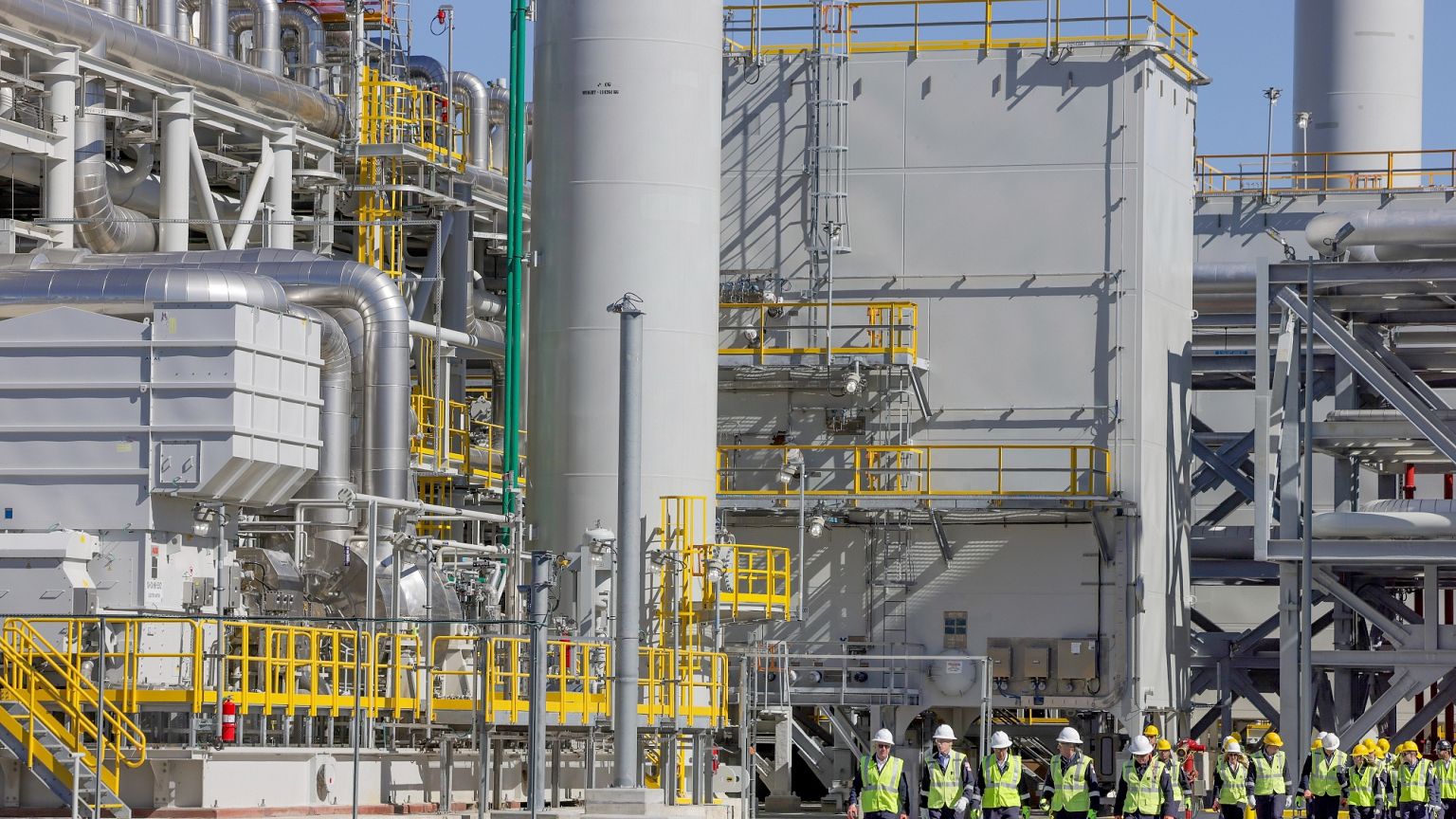
In a bid to avoid harsh tariffs being imposed, many Asian countries are looking to strike large LNG deals with the US. But could this be disastrous for the clean energy transition?
Asian countries are offering to buy more US liquefied natural gas (LNG) in negotiations with the Trump administration as a way to alleviate tensions over US trade deficits and stave off higher tariffs. Analysts warn that strategy could undermine those countries' long-term climate ambitions and energy security.
Buying more US LNG has topped the list of concessions Asian countries have offered in talks with Washington over President Donald Trump's sweeping tariffs on foreign goods. US efforts to sell more LNG to Asia predate the Trump administration, but they've gained momentum with his intense push to win trade deals.
Vietnam's Prime Minister underlined the need to buy more of the super-chilled fuel and the government signed a deal in May with an American company to develop a gas import hub.
JERA, Japan’s largest power generator, signed new 20-year contracts in June to purchase up to 5.5 million metric tons of US gas annually starting around 2030.
LNG pipelines from Alaska
Liquefied natural gas, or LNG, is natural gas cooled to a liquid form for easy storage and transportation that is used as a fuel for transport, residential cooking and heating and industrial processes.
Trump discussed cooperation on a $44 billion (€37.8bn) Alaska LNG project with South Korea, prompting a visit by officials to the site in June. The US president has promoted the project as a way to supply gas from Alaska’s vast North Slope to a liquefication plant at Nikiski in south-central Alaska, with an eye largely on exports to Asian countries while bypassing the Panama Canal.
Thailand has offered to commit to a long-term deal for American fuel and shown interest in the same Alaska project to build a nearly 1,300-kilometre pipeline that would funnel gas from Alaska's North Slope region.
The Philippines is also considering importing gas from Alaska while India is mulling a plan to scrap import taxes on US energy shipments to help narrow its trade surplus with Washington.
“Trump has put pressure on a seeming plethora of Asian trading partners to buy more US LNG,” said Tim Daiss, at the APAC Energy Consultancy, pointing out that Japan had agreed to buy more despite being so “awash in the fuel” that it was being forced to cancel projects and contracts to offload the excess to Asia's growing economies.
“Not good for Southeast Asia's sustainability goals,” he added.
LNG deals could derail renewable ambitions
Experts say LNG purchasing agreements could slow adoption of renewable energy in Asia.
Locking into long-term deals could leave countries with outdated infrastructure as the world shifts rapidly toward cleaner energy sources, like solar or wind, that offer faster, more affordable ways to meet growing power demand, said Indra Overland, head of the Center for Energy Research at the Norwegian Institute of International Affairs.
Building pipelines, terminals, and even household gas stoves creates systems that are expensive and difficult to replace—making it harder to switch to renewables later. “And you’re more likely then to get stuck for longer,” he said.
Energy companies that profit from gas or coal are powerful vested interests, swaying policy to favour their business models, he said.
LNG burns cleaner than coal, but it’s still a fossil fuel that emits greenhouse gases and contributes to climate change.
Many LNG contracts include “take-or-pay” clauses, obliging governments to pay even if they don’t use the fuel. Christopher Doleman of the Institute for Energy Economics and Financial Analysis warns that if renewable energy grows fast, reducing the need for LNG, countries may still have to pay for gas they no longer need.
Pakistan is an example. Soaring LNG costs drove up electricity prices, pushing consumers to install rooftop solar panels. As demand for power drops and gas supply surges, the country is deferring LNG shipments and trying to resell excess fuel.
The LNG math doesn't add up
Experts said that although countries are signalling a willingness to import more US LNG, they're unlikely to import enough to have a meaningful impact on US trade deficits.
South Korea would need to import 121 million metric tons of LNG in a year — 50% more than the total amount of LNG the US exported globally last year and triple what South Korea imported, said Doleman.
Vietnam — with a trade surplus with the US twice the size of Korea’s — would need to import 181 million metric tons annually, more than double what the US exported last year.
Other obstacles stand in the way. The Alaska LNG project is widely considered uneconomic. Both coal and renewable energy in Asia are so much cheaper that US gas would need to cost less than half its current price to compete.
Tariffs on Chinese steel could make building gas pipelines and LNG terminals more expensive, while longstanding delays to build new gas turbines mean new gas power projects may not come online until 2032.
Meanwhile, a global glut in LNG will likely drive prices lower, making it even harder for countries to justify locking into long-term deals with the United States at current higher prices.
LNG deals raise energy security concerns
Committing to long-term US LNG contracts could impact regional energy security at a time of growing geopolitical and market uncertainties, analysts said.
A core concern is over the long-term stability of the US as a trading partner, said Overland. “The US is not a very predictable entity. And to rely on energy from there is a very risky proposition,” he said.
LNG only contributes to energy security when it’s available and affordable, says Dario Kenner of Zero Carbon Analytics.
“That’s the bit that they leave out...But it’s pretty important,” he said.
This was the concern during the recent potential disruptions to fuel shipments through the Strait of Hormuz, and earlier in Russia's full-scale invasion of Ukraine, when LNG cargoes originally destined for Asia were re-routed to Europe. Despite having contracts, Asian countries like Bangladesh and Sri Lanka were outbid by European buyers.
“Events in Europe, which can seem very far away, can have an impact on availability and prices in Asia,” Kenner said.
Asian countries can improve their energy security and make progress toward cutting carbon emissions by building more renewable energy, he said, noting there is vast room for that given that only about 1% of Southeast Asia’s solar and wind potential is being used.
“There are genuine choices to meet rising electricity demand. It is not just having to build LNG,” he said.
Source: Trump’s tariff pressure pushes Asia toward US LNG deals, but at what cost? | Euronews
Vocabulary:
bid /bɪd/ an offer by a person or a company to pay a particular amount of money for something
harsh /hɑːʃ/ cruel, severe and unkind
impose /ɪmˈpəʊz/ to introduce a new law, rule, tax, etc.; to order that a rule, punishment, etc. be used
strike /straɪk/ hit somebody/something
disastrous /dɪˈzɑːstrəs/ very bad, harmful or unsuccessful
liquefy /ˈlɪkwɪfaɪ/ to become liquid; to make something liquid
negotiation /nɪˌɡəʊʃiˈeɪʃn/ formal discussion between people who are trying to reach an agreement
alleviate /əˈliːvieɪt/ alleviate something to make something less severe
tension /ˈtenʃn/ a situation in which people do not trust each other, or feel unfriendly towards each other, and that may cause them to attack each other.
deficit /ˈdefɪsɪt/ the amount by which money spent or owed is greater than money earned in a particular period of time
stave /steɪv/ a strong stick or pole
topped, top : be morecon
concession /kənˈseʃn/ something that you allow or do, or allow somebody to have, in order to end an argument or to make a situation less difficult.
sweeping /ˈswiːpɪŋ/ having an important effect on a large part of something
foreign /ˈfɒrən/ in or from a country that is not your own
predate /ˌpriːˈdeɪt/ predate something to be built or formed, or to happen, at an earlier date than something else in the past.
intense /ɪnˈtens/ very great; very strong
pipeline /ˈpaɪplaɪn/ a series of pipes that are usually underground and are used for carrying oil, gas, etc. over long distances
residential /ˌrezɪˈdenʃl/ (of an area of a town) suitable for living in; consisting of houses rather than factories or offices
prompting /ˈprɒmptɪŋ/ an act of persuading somebody to do something
mull /mʌl/
shipment /ˈʃɪpmənt/ the process of sending goods from one place to another
offload /ˌɒfˈləʊd/ to take a load of goods off a ship, train or truck
derail /diːˈreɪl/ to leave the track; to make a train do this
affordable /əˈfɔːdəbl/ cheap enough that people can afford to pay it or buy it
obliging /əˈblaɪdʒɪŋ/
turbine /ˈtɜːbaɪn/
geopolitical /ˌdʒiːəʊpəˈlɪtɪkl/ connected with the political relations between countries and groups of countries in the world, as influenced by their geography.
concern /kənˈsɜːn/ concern somebody/something to affect somebody/something; to involve somebody/something
destined /ˈdestɪnd/ having a future that has been decided or planned at an earlier time, especially by fate
rout /raʊt/ rout somebody to defeat somebody completely in a competition, a battle, etc.
outbid /ˌaʊtˈbɪd/to offer more money than somebody else in order to buy something, for example at an auction.
genuine /ˈdʒenjuɪn/ real; exactly what it appears to be; not artificial
In a bid to avoid harsh tariffs being imposed, many Asian countries are looking to strike large LNG deals with the US. But could this be disastrous for the clean energy transition?
Nhằm tránh bị áp đặt thuế quan khắc nghiệt, nhiều nước châu Á đang tìm cách ký kết các thỏa thuận LNG lớn với Hoa Kỳ. Nhưng liệu điều này có thể gây ra thảm họa cho quá trình chuyển đổi năng lượng sạch?
Asian countries are offering to buy more US liquefied natural gas (LNG) in negotiations with the Trump administration as a way to alleviate tensions over US trade deficits and stave off higher tariffs. Analysts warn that strategy could undermine those countries' long-term climate ambitions and energy security.
Các nước châu Á đang đề nghị mua thêm khí thiên nhiên hóa lỏng (LNG) của Mỹ trong các cuộc đàm phán với chính quyền Trump như một cách để giảm bớt căng thẳng về thâm hụt thương mại của Mỹ và ngăn chặn việc tăng thuế quan. Các nhà phân tích cảnh báo rằng chiến lược này có thể làm suy yếu tham vọng dài hạn về khí hậu và an ninh năng lượng của các nước này.
Buying more US LNG has topped the list of concessions Asian countries have offered in talks with Washington over President Donald Trump's sweeping tariffs on foreign goods. US efforts to sell more LNG to Asia predate the Trump administration, but they've gained momentum with his intense push to win trade deals.
Việc mua thêm khí tự nhiên hóa lỏng (LNG) của Mỹ đứng đầu danh sách các nhượng bộ mà các nước châu Á đã đưa ra trong các cuộc đàm phán với Washington về việc Tổng thống Donald Trump áp thuế quan mạnh tay đối với hàng hóa nước ngoài. Nỗ lực của Hoa Kỳ nhằm bán thêm khí tự nhiên hóa lỏng (LNG) cho châu Á đã có từ trước chính quyền Trump, nhưng đã được thúc đẩy mạnh mẽ nhờ nỗ lực mạnh mẽ của ông nhằm giành được các thỏa thuận thương mại.
Vietnam's Prime Minister underlined the need to buy more of the super-chilled fuel and the government signed a deal in May with an American company to develop a gas import hub.
JERA, Japan’s largest power generator, sign
Thủ tướng Việt Nam nhấn mạnh nhu cầu mua thêm nhiên liệu siêu lạnh và chính phủ đã ký một thỏa thuận vào tháng 5 với một công ty Mỹ để phát triển một trung tâm nhập khẩu khí đốt.ed new 20-year contracts in June to purchase up to 5.5 million metric tons of US gas annually starting around 2030.
LNG pipelines from Alaska
Liquefied natural gas, or LNG, is natural gas cooled to a liquid form for easy storage and transportation that is used as a fuel for transport, residential cooking and heating and industrial processes.
Khí thiên nhiên hóa lỏng, hay LNG, là khí thiên nhiên được làm lạnh thành dạng lỏng để dễ dàng lưu trữ và vận chuyển, được sử dụng làm nhiên liệu cho giao thông, nấu ăn và sưởi ấm trong nhà và các quy trình công nghiệp.
Trump discussed cooperation on a $44 billion (€37.8bn) Alaska LNG project with South Korea, prompting a visit by officials to the site in June. The US president has promoted the project as a way to supply gas from Alaska’s vast North Slope to a liquefication plant at Nikiski in south-central Alaska, with an eye largely on exports to Asian countries while bypassing the Panama Canal
Trump đã thảo luận về việc hợp tác với Hàn Quốc trong dự án khí hóa lỏng Alaska trị giá 44 tỷ đô la (37,8 tỷ euro), dẫn đến chuyến thăm của các quan chức đến địa điểm này vào tháng 6. Tổng thống Mỹ đã quảng bá dự án này như một cách để cung cấp khí đốt từ Sườn Bắc rộng lớn của Alaska cho một nhà máy hóa lỏng tại Nikiski ở miền nam-trung Alaska, với mục tiêu chủ yếu là xuất khẩu sang các nước châu Á mà không phải đi qua Kênh đào Panama.
Thailand has offered to commit to a long-term deal for American fuel and shown interest in the same Alaska project to build a nearly 1,300-kilometre pipeline that would funnel gas from Alaska's North Slope region.
Thái Lan đã đề nghị cam kết một thỏa thuận dài hạn về nhiên liệu của Mỹ và bày tỏ sự quan tâm đến dự án tương tự ở Alaska nhằm xây dựng đường ống dài gần 1.300 km để vận chuyển khí đốt từ khu vực Sườn Bắc Alaska.
The Philippines is also considering importing gas from Alaska while India is mulling a plan to scrap import taxes on US energy shipments to help narrow its trade surplus with Washington.
Philippines cũng đang cân nhắc nhập khẩu khí đốt từ Alaska trong khi Ấn Độ đang cân nhắc kế hoạch bãi bỏ thuế nhập khẩu đối với các lô hàng năng lượng của Hoa Kỳ để giúp thu hẹp thặng dư thương mại với Washington.
“Trump has put pressure on a seeming plethora of Asian trading partners to buy more US LNG,” said Tim Daiss, at the APAC Energy Consultancy, pointing out that Japan had agreed to buy more despite being so “awash in the fuel” that it was being forced to cancel projects and contracts to offload the excess to Asia's growing economies.
Tim Daiss, tại Công ty tư vấn năng lượng APAC, cho biết: "Trump đã gây sức ép lên rất nhiều đối tác thương mại châu Á để mua thêm LNG của Hoa Kỳ", đồng thời chỉ ra rằng Nhật Bản đã đồng ý mua thêm mặc dù "đang thừa nhiên liệu" đến mức buộc phải hủy bỏ các dự án và hợp đồng để chuyển lượng nhiên liệu dư thừa sang các nền kinh tế đang phát triển của châu Á.
“Not good for Southeast Asia's sustainability goals,” he added.
LNG deals could derail renewable ambitions
Experts say LNG purchasing agreements could slow adoption of renewable energy in Asia.
Các chuyên gia cho biết các thỏa thuận mua LNG có thể làm chậm quá trình áp dụng năng lượng tái tạo ở châu Á.
Locking into long-term deals could leave countries with outdated infrastructure as the world shifts rapidly toward cleaner energy sources, like solar or wind, that offer faster, more affordable ways to meet growing power demand, said Indra Overland, head of the Center for Energy Research at the Norwegian Institute of International Affairs.
Indra Overland, người đứng đầu Trung tâm Nghiên cứu Năng lượng tại Viện Quan hệ Quốc tế Na Uy, cho biết việc ký kết các thỏa thuận dài hạn có thể khiến các quốc gia có cơ sở hạ tầng lạc hậu khi thế giới chuyển dịch nhanh chóng sang các nguồn năng lượng sạch hơn, như năng lượng mặt trời hoặc gió, cung cấp các phương pháp nhanh hơn và giá cả phải chăng hơn để đáp ứng nhu cầu điện ngày càng tăng.
Building pipelines, terminals, and even household gas stoves creates systems that are expensive and difficult to replace—making it harder to switch to renewables later. “And you’re more likely then to get stuck for longer,” he said.
Việc xây dựng đường ống, nhà ga, và thậm chí cả bếp gas gia dụng tạo ra những hệ thống đắt đỏ và khó thay thế, khiến việc chuyển sang năng lượng tái tạo sau này trở nên khó khăn hơn. "Và khả năng bạn bị mắc kẹt lâu hơn cũng cao hơn", ông nói.
Energy companies that profit from gas or coal are powerful vested interests, swaying policy to favour their business models, he said.
Ông cho biết các công ty năng lượng thu lợi từ khí đốt hoặc than đá là những thế lực có quyền lực, có thể tác động đến chính sách theo hướng có lợi cho mô hình kinh doanh của họ.
LNG burns cleaner than coal, but it’s still a fossil fuel that emits greenhouse gases and contributes to climate change.
Khí LNG cháy sạch hơn than đá, nhưng nó vẫn là nhiên liệu hóa thạch thải ra khí nhà kính và góp phần gây ra biến đổi khí hậu.
Many LNG contracts include “take-or-pay” clauses, obliging governments to pay even if they don’t use the fuel. Christopher Doleman of the Institute for Energy Economics and Financial Analysis warns that if renewable energy grows fast, reducing the need for LNG, countries may still have to pay for gas they no longer need.
Nhiều hợp đồng LNG bao gồm điều khoản "mua hoặc trả", buộc các chính phủ phải trả tiền ngay cả khi họ không sử dụng nhiên liệu. Christopher Doleman thuộc Viện Kinh tế Năng lượng và Phân tích Tài chính cảnh báo rằng nếu năng lượng tái tạo phát triển nhanh chóng, làm giảm nhu cầu LNG, các quốc gia có thể vẫn phải trả tiền cho lượng khí đốt mà họ không còn cần nữa.
Pakistan is an example. Soaring LNG costs drove up electricity prices, pushing consumers to install rooftop solar panels. As demand for power drops and gas supply surges, the country is deferring LNG shipments and trying to resell excess fuel.
Pakistan là một ví dụ. Chi phí LNG tăng cao đã đẩy giá điện lên cao, buộc người tiêu dùng phải lắp đặt các tấm pin mặt trời trên mái nhà. Khi nhu cầu điện giảm và nguồn cung khí đốt tăng vọt, quốc gia này đang trì hoãn việc vận chuyển LNG và cố gắng bán lại lượng nhiên liệu dư thừa.
The LNG math doesn't add up
Experts said that although countries are signalling a willingness to import more US LNG, they're unlikely to import enough to have a meaningful impact on US trade deficits.
Các chuyên gia cho biết mặc dù các nước đang ra tín hiệu sẵn sàng nhập khẩu thêm LNG của Hoa Kỳ, nhưng họ khó có thể nhập khẩu đủ để tạo ra tác động có ý nghĩa đến thâm hụt thương mại của Hoa Kỳ.
South Korea would need to import 121 million metric tons of LNG in a year — 50% more than the total amount of LNG the US exported globally last year and triple what South Korea imported, said Doleman.
Doleman cho biết Hàn Quốc sẽ cần nhập khẩu 121 triệu tấn LNG mỗi năm - nhiều hơn 50% so với tổng lượng LNG mà Hoa Kỳ xuất khẩu trên toàn cầu vào năm ngoái và gấp ba lần lượng LNG mà Hàn Quốc nhập khẩu.
Vietnam — with a trade surplus with the US twice the size of Korea’s — would need to import 181 million metric tons annually, more than double what the US exported last year.
Việt Nam - với thặng dư thương mại với Hoa Kỳ gấp đôi so với Hàn Quốc - sẽ cần nhập khẩu 181 triệu tấn mỗi năm, gấp đôi lượng xuất khẩu của Hoa Kỳ vào năm ngoái.
Other obstacles stand in the way. The Alaska LNG project is widely considered uneconomic. Both coal and renewable energy in Asia are so much cheaper that US gas would need to cost less than half its current price to compete.
Những trở ngại khác đang cản trở. Dự án LNG Alaska bị nhiều người coi là không kinh tế. Cả than đá và năng lượng tái tạo ở châu Á đều rẻ hơn rất nhiều, đến nỗi giá khí đốt của Mỹ cần phải giảm xuống còn chưa đến một nửa giá hiện tại để cạnh tranh.
Tariffs on Chinese steel could make building gas pipelines and LNG terminals more expensive, while longstanding delays to build new gas turbines mean new gas power projects may not come online until 2032.
Thuế quan đối với thép Trung Quốc có thể khiến việc xây dựng đường ống dẫn khí và kho chứa LNG trở nên đắt đỏ hơn, trong khi sự chậm trễ kéo dài trong việc xây dựng các tua-bin khí mới có nghĩa là các dự án điện khí mới có thể không được đưa vào hoạt động cho đến năm 2032.
Meanwhile, a global glut in LNG will likely drive prices lower, making it even harder for countries to justify locking into long-term deals with the United States at current higher prices.
Trong khi đó, tình trạng dư thừa LNG toàn cầu có thể sẽ đẩy giá xuống thấp hơn, khiến các quốc gia càng khó biện minh cho việc ký kết các thỏa thuận dài hạn với Hoa Kỳ ở mức giá cao hiện tại.
LNG deals raise energy security concerns
Committing to long-term US LNG contracts could impact regional energy security at a time of growing geopolitical and market uncertainties, analysts said.
Các nhà phân tích cho biết việc cam kết ký hợp đồng LNG dài hạn với Hoa Kỳ có thể tác động đến an ninh năng lượng khu vực trong bối cảnh bất ổn địa chính trị và thị trường ngày càng gia tăng.
A core concern is over the long-term stability of the US as a trading partner, said Overland. “The US is not a very predictable entity. And to rely on energy from there is a very risky proposition,” he said.
Ông Overland cho biết mối quan ngại cốt lõi nằm ở sự ổn định lâu dài của Hoa Kỳ với tư cách là đối tác thương mại. "Hoa Kỳ không phải là một thực thể dễ đoán. Và việc phụ thuộc vào năng lượng từ đó là một đề xuất rất rủi ro", ông nói.
LNG only contributes to energy security when it’s available and affordable, says Dario Kenner of Zero Carbon Analytics.
“That’s the bit that they leave out...But it’s pretty important,” he said.
Theo Dario Kenner của Zero Carbon Analytics, LNG chỉ đóng góp vào an ninh năng lượng khi nó có sẵn và giá cả phải chăng.
"Đó là chi tiết mà họ bỏ qua... Nhưng nó khá quan trọng", ông nói.
This was the concern during the recent potential disruptions to fuel shipments through the Strait of Hormuz, and earlier in Russia's full-scale invasion of Ukraine, when LNG cargoes originally destined for Asia were re-routed to Europe. Despite having contracts, Asian countries like Bangladesh and Sri Lanka were outbid by European buyers.
Đây là mối lo ngại trong bối cảnh gần đây có thể xảy ra gián đoạn vận chuyển nhiên liệu qua eo biển Hormuz, và trước đó là cuộc xâm lược toàn diện của Nga vào Ukraine, khi các chuyến hàng LNG ban đầu đến châu Á đã phải chuyển hướng sang châu Âu. Mặc dù đã có hợp đồng, các nước châu Á như Bangladesh và Sri Lanka vẫn bị người mua châu Âu trả giá cao hơn.
“Events in Europe, which can seem very far away, can have an impact on availability and prices in Asia,” Kenner said.
Kenner cho biết: “Các sự kiện ở châu Âu, vốn có vẻ rất xa xôi, có thể tác động đến tình trạng sẵn có và giá cả ở châu Á”.
Asian countries can improve their energy security and make progress toward cutting carbon emissions by building more renewable energy, he said, noting there is vast room for that given that only about 1% of Southeast Asia’s solar and wind potential is being used.
Ông cho biết các nước châu Á có thể cải thiện an ninh năng lượng và đạt được tiến bộ trong việc cắt giảm lượng khí thải carbon bằng cách xây dựng nhiều năng lượng tái tạo hơn, đồng thời lưu ý rằng có rất nhiều tiềm năng cho việc này vì chỉ có khoảng 1% tiềm năng năng lượng mặt trời và gió của Đông Nam Á đang được sử dụng.
“There are genuine choices to meet rising electricity demand. It is not just having to build LNG,” he said.
“Có những lựa chọn thực sự để đáp ứng nhu cầu điện ngày càng tăng. Không chỉ là việc phải xây dựng LNG”, ông nói.


Nhận xét
Đăng nhận xét