30 Days/29: The sea is like a minefield': The web of illegal fish traps in Italy's Mediterranean
12 June 2025
 Sea Shepherd
Off the coast of Sicily, Sea Shepherd and its volunteers are hunting down illegal fish traps and working with Italian authorities to crack down on this environmental crime.
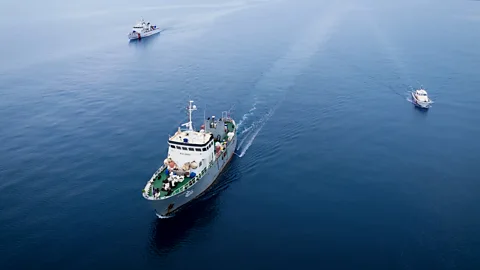
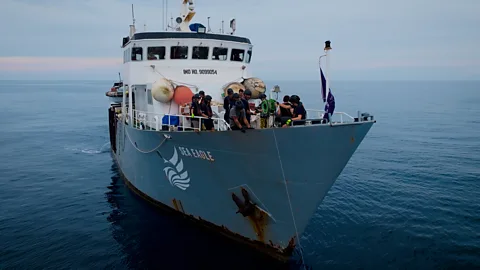
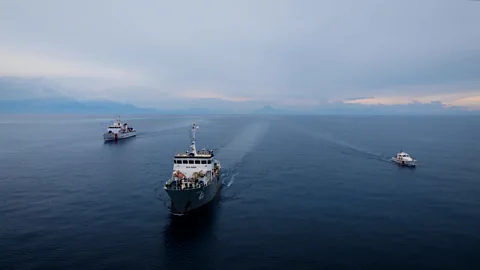
The flat water melts into the teal-coloured sky as a former pilot vessel, the Sea Eagle, sails through the calm Tyrrhenian Sea surrounding the Aeolian Archipelago of Sicily.
The ship is operated by Sea Shepherd, an international marine conservation non-profit. Today, the team is searching for fish aggregating devices (FADs), man-made plastic structures used to attract fish. They float in the water, anchored to the seafloor, with hanging nets to catch fish. FADs made from plastic, without GPS tracking devices attached, are illegal in Italy.
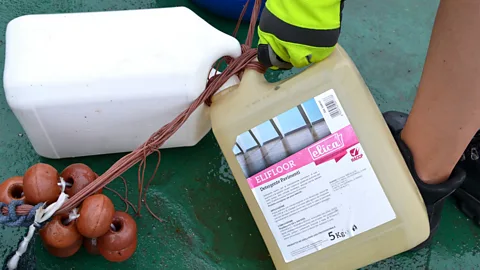
While listening to techno music, a group of volunteers uses a winch to detach one of the FADs from the seafloor. A large plastic container labelled "corrosive" emerges from the sea.
"The [techno] rhythm gives us the right energy," says James* (the crew do not wish to use their full names for safety reasons), a young Canadian volunteer who is running the operation and whose arms are covered in ocean-inspired tattoos. The volunteers work tirelessly to extract the plastic FADs from the sea and pile the tangled trash heaps into big bags. The retrieved plastic will be turned into plastic crates for sea turtle rescue operations.
FADs are used worldwide by fishermen to attract pelagic fishes into surrounding nets. These fish-trapping devices are typically composed of used fuel, pharmaceutical and other chemical containers among other types of plastic waste, dark plastic nets and rocks, all of which is held together by a few miles of nylon thread. Marine wildlife is attracted to the shade provided by FADs.
Abandoned FADs are illegal. They can cause a wide range of adverse environmental impacts, including the entanglement of marine life (particularly sharks and turtles), act as a habitat for the spread of invasive species, and wash ashore on beaches or become stranded on coral reefs. Many lost or abandoned FADs sink, causing environmental harm to deep-sea habitats.
 Sea Shepherd
The material the FADs are made of matters too. FADs are required by Italian law to be biodegradable. All the FADs removed by the Sea Shepherds from the South Tyrrhenian Sea are illegal and made of plastic, says Nicola Silvestri, frigate captain and head of the Fishing Control Centre area in Western Sicily. They also lack markings which allow them to be traced back to the fishing boat that used them, he says.
"Illegal FADs are very cheap to produce, but at the same time highly dangerous for ecosystems," says Andrea Morello, president of Sea Shepherd Italy. "These devices are installed by fishers in the month of August, then they catch fish around them in summer. Eventually, winter storms remove the devices, creating tonnes of hazardous and plastic waste floating in the sea."
In this stretch of sea around Sicily's Aeolian Archipelago, the target fishing species in the summer are juvenile ricciola, bluefin tuna, juvenile swordfish and pilot fish. FADs can damage the entire population, by preventing juveniles from maturing and reproducing.
The Sea Shepherd mission is part of the organisation's ongoing Siso operation in Sicily to combat these illegal fishing devices.
"We are witnessing the biggest marine environmental disaster ever," says Morello. "The sea is like a minefield full of FAD lines in every direction, placed by fishers who split the sea surface among them, threatening biodiversity."
The Sea Shepherd volunteers remove the long nylon threads attached to the FADs which can harm fish, turtles, humpback whales and dolphins by trapping and suffocating them. According to Sea Shepherd, there are more than 36,000 FADs, each one composed of almost 1.2 km (0.7 miles) of nylon lines in the South Tyrrhenian Sea, part of the Mediterranean Sea.
It takes the volunteers one hour to extract almost 2km (1.2 miles) of a FAD line, it's the first out of seven removed that day. Not far away, a police coast guard boat is monitoring the work: later it will seize the illegal plastic materials. The use of FADs made from plastic waste, without GPS trackers, is an environmental crime in Italy.
Sarah, a young German volunteer, rings the bell installed on the deck of the vessel, to celebrate and notify the crew that another FAD has successfully been extracted from the seabed. In total, the volunteers haul seven FADs onto the deck that day – their combined mass is the same size as a small car.
 Sea Shepherd
Sea Shepherd runs covert missions, so that they are undetected by illegal fishers. The organisation maps the FADs using deep-sea radar technology and binoculars and removes them in collaboration with national maritime authorities.
Between 2017 and 2024, the organisation removed 676 FADs from the Mediterranean Sea, says Morello. "We define ourselves as FAD hunters: here to protect the sea. We are also carrying out the first census of FADs ever realised in the Mediterranean Sea," he says.
The data collected during this mission will be analysed as part of a research project that Sea Shepherd runs with the National Biodiversity Future Centre of the University of Palermo in Sicily and the Cima Research Foundation, based in Liguria, Italy. Using statistical analysis, Sea Shepherd has been producing maps since 2017 to identify for the first time the extent of this ghost labyrinth created by FADs anchored to the seabed.
"With the information provided by Sea Shepherd, we were able to have a precise mapping of the location and composition of these devices," says Alberto Sechi, a marine biologist at Cima Foundation. "Since 2017, the plastic lines (mostly polypropylene) used to anchor the FADs exceeds 2,500km (1,553 miles): that corresponds to the distance between Paris and Moscow."
In a single night, Morello says the Sea Shepherds discovered around 912 FADs in the waters surrounding the Sicilian island of Alicudi, each one composed of more than 1km (0.6 miles) of nylon threads. "Multiplying the number of FADs we found by the medium length of each thread, the total length of lines used in this area is a staggering 43,200 km (26.284 miles) of nylon: this is more than the circumference of the entire planet Earth," says Morello.
Sea Shepherd's work involves removing as many FADs as possible, but then, the disposal problem arises. In 2022, the non-profit started collaborating with iMilani, an Italian company that specialises in building plastic crates from recycled materials. Together, they have created the Sea Turtle Crates project, which aims to transform the FADs into plastic crates for sea turtle rescue operations. After the entangled turtles have been freed from the FADs, they are put into the crates which Sea Shepherd uses to transport them to veterinarians. Six loggerhead turtles have been rescued to date and 100 turtle recovery boxes have been created from FADs, says Roberto Milani, founder of iMilani and a freediver.
The company is hoping to design other items with FADs waste in future, including pens and other gadgets, which can be sold to finance Sea Shepherd's activities, says Milani.
 Sea Shepherd
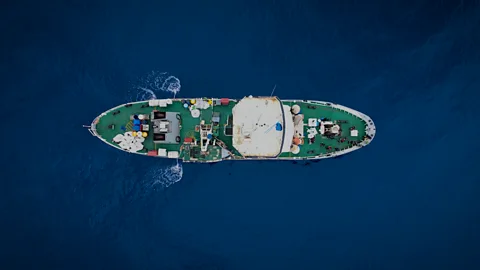
On the bow of the Sea Eagle vessel, the boxes for injured turtles are piled to the side of big bags full of plastic lines extracted from the FADs. In one day at sea, the crew removed seven FADs composed of 6.5km (4 miles) of nylon lines and plastic containers. Their labels reveal their previous lives: from hospital waste and corrosive liquids, to oil, gas and detergent jerrycans. Using radar, the Sea Shepherds map more than 100 FADs throughout the day.
The crew's work begins early in the morning, and continues until sunset, with brief breaks for meals. Tuti, 23, an Israeli volunteer, prepares a vegan buffet each day. Today's menu is inspired by Latin American foods, such as empanadas, chimichurri, black beans mole and corn tortillas, which Tuti learned to cook during a Sea Shepherd mission in the Gulf of California, where she worked to protect the last vaquita dolphins.
Onboard are 20 volunteers, from four continents with different ages and backgrounds: from Willie, a 20-year-old German student, to retired engineer and sea captain Gigi, 63, who joins Sea Shepherd's missions several times a year.
"We are here because we want to be part of the solution. We are sort of part of it, by removing all those plastics from the seas," says Zafar from Pakistan, who is in charge of measuring and cataloguing each FAD for the database. "I don't understand people's insensitivity towards the sea and its inhabitants," he says.
Many FADs are anchored to the seafloor with stones or buckets full of cement, says Teresa Romeo, director of the Sicily Marine Centre at the Anton Dohrn Zoological Station in Naples, Italy. She has been studying FADs since the 1990s. "They modify the seabed environment and affect all the species living there," she says.
Romeo says a mandatory recovery of all FADs should be implemented. "We need to establish a spatial management plan to define a specific area [for FADs] and replace floating materials with biodegradable ones, in order to have a more sustainable fishing practice in the Mediterranean Sea," says Romeo.
Sea Shepherd makes "a great contribution to the mapping actions of FADs and their efforts are useful for monitoring impacts, but in my opinion the aim cannot be drastic removal, but to regulate their use," she says.
 Sea Shepherd
But creating biodegradable devices from materials such as hemp is difficult due to the high cost, according to Sechi. "Creating a completely biodegradable FAD is a significant challenge, and so far, no one has come up with a solution," he says. "One alternative could be hemp, but kilometres of hemp thread are very expensive, and no angler would spend that much."
Experts such as Romeo say that the transition to biodegradable and non-toxic materials would be an important part of the solution to reduce marine pollution from fisheries based on FADs. As well as breaking down in the ocean, biodegradable materials may contain fewer toxins and heavy metals, compared to plastic, says Romeo, though she agrees that cost is a major barrier for materials such as hemp.
In the meantime, the Sea Shepherds continue to sail the seas to map and remove illegal fish-trapping devices, collaborating closely with the local coastguard, researchers and private enterprises to crack down on this environmental crime.
"This alliance is a solution to protect the deep sea," says Morello.
Vocabulary:
coast /kəʊst/ enlarge imagethe land next to or near to the sea or ocean.
illegal /ɪˈliːɡl/ not allowed by the law.
crack /kræk/
crime kraɪm/ activities that involve breaking the law
melt /melt/ to become or make something become liquid as a result of heating
teal-cloured
former /ˈfɔːmə(r)/ that existed in earlier times.
vessel /ˈvesl/ a tube that carries blood through the body of a person or an animal, or liquid through the parts of a plant.
sail /seɪl/ (of a boat or ship or the people on it) to travel on water using sails or an engine.
calm /kɑːm/ not excited, nervous or upset.
marine /məˈriːn/ connected with the sea and the creatures and plants that live there.
aggregating /ˈæɡrɪɡeɪt/ to put together different items, amounts, etc. into a single group or total/.
devices /dɪˈvaɪs/ an object or a piece of equipment that has been designed to do a particular job.
float /fləʊt/ on water/in air
anchor /ˈæŋkə(r)/ anchor (something) to let an anchor down from a boat or ship in order to prevent it from moving away.
hanging /ˈhæŋɪŋ/ the practice of killing somebody as a punishment by tying a rope around their neck and allowing them to drop from a high place; an occasion when this happens.
winch /wɪntʃ/ a machine for lifting or pulling heavy objects using a rope or chain.
detach /dɪˈtætʃ/ to remove something from something larger; to become separated from something.
corrosive /kəˈrəʊsɪv/ tending to destroy something slowly by chemical action.
emerge /ɪˈmɜːdʒ/ to move out of or away from something and become possible to see.
rhythm /ˈrɪðəm/ a strong regular repeated pattern of sounds or movements.
crew /kruː/ on ships and planes.
tirelessly /ˈtaɪələsli/ in a way that involves putting a lot of hard work and energy into something over a long period of time.
pile /paɪl/ a number of things that have been placed on top of each other.
tangles /ˈtæŋɡl/ a twisted mass of threads, hair, etc. that cannot be easily separated.
heap /hiːp/ an untidy pile of something.
retrieved /rɪˈtriːv/ to bring or get something back, especially from a place where it should not be.
rescue /ˈreskjuː/
typically /ˈtɪpɪkli/ used to say that something usually happens in the way that you are stating.
composed /kəmˈpəʊzd/ be composed of something (formal) to be made or formed from several parts, things or people.
entanglement /ɪnˈtæŋɡlmənt/ a difficult or complicated relationship with another person or country.
invasive /ɪnˈveɪsɪv/ spreading very quickly and difficult to stop.
ashore /əˈʃɔː(r)/ towards, onto or on land, having come from an area of water such as the sea or a river.
stranded /strænd/ strand somebody to leave somebody in a place from which they have no way of leaving.
coral /ˈkɒrəl/ a hard substance that is red, pink or white in colour, and that forms on the bottom of the sea from the bones of very small creatures. Coral is often used in jewellery.
trace /treɪs/ trace somebody/something (to something) to find or discover.
eventually /ɪˈventʃuəli/ at the end of a period of time or a series of events.
stretch /stretʃ/ make/become bigger/looser.
juvenile /ˈdʒuːvənaɪl/ relating to young people who are not yet adults.
ricciocla ???
bluein tuna
swordfish /ˈsɔːdfɪʃ/ a large sea fish with a very long, thin, pointed upper jaw.
mature /məˈtʃʊə(r)/ become fully grown
witness /ˈwɪtnəs/ witness something to see something happen (typically a crime or an accident).
disaster /dɪˈzɑːstə(r)/ an unexpected event, such as a very bad accident, a flood or a fire, that kills a lot of people or causes a lot of damage.
suffocating /ˈsʌfəkeɪtɪŋ/ making it difficult to breathe normally
minefield /ˈmaɪnfiːld/ an area of land or water where mines (= bombs that explode when they are touched) have been hidden.
seize /siːz/ to take somebody/something in your hand suddenly and using force.
the seabed /ðə ˈsiːbed/ the floor of the sea.
covert /ˈkʌvət/ secret or hidden, making it difficult to notice.
binocular /bɪˈnɒkjələ(r)/ using two eyes to see
maritime /ˈmærɪtaɪm/ connected with the sea or ships
census /ˈsensəs/ the process of officially counting something, especially a country’s population, and recording various facts.
ghost labyrinth
precise /prɪˈsaɪs/ clear and accurate
exceed /ɪkˈsiːd/ exceed something to be greater than a particular number or amount.
correspond /ˌkɒrəˈspɒnd/ to be the same as or match something.
disposal /dɪˈspəʊzl/ the act of getting rid of something.
arise /əˈraɪz/ (especially of a problem or a difficult situation) to happen; to start to exist
crate /kreɪt/ a large wooden container for transporting goods.
entangle /ɪnˈtæŋɡl/ to make somebody/something become caught or twisted in something.
veterinarian /ˌvetərɪˈneəriən/ a person who has been trained in the science of animal medicine, whose job is to treat animals who are sick or injured.
detergent /dɪˈtɜːdʒənt/ a liquid or powder that helps remove dirt, for example from clothes or dishes.
jerrycans /ˈdʒerikæn/ a large metal or plastic container with flat sides, used for carrying petrol or water.
prepare /prɪˈpeə(r)/
cement /sɪˈment/ a grey powder made by burning clay and lime that sets hard when it is mixed with water. Cement is used in building to stick stones and bricks together and to make very hard surfaces.
hemp /hemp/ a plant that is used for making rope and cloth, and also to make the drug cannabis.
Grammaly:
--------------------------------------------------------------------------------------------------
The flat water melts into the teal-coloured sky as a former pilot vessel, the Sea Eagle, sails through the calm Tyrrhenian Sea surrounding the Aeolian Archipelago of Sicily.
[into the teal-coloured sky] giới từ + cụm danh từ: bổ ngữ chỉ nơi chốn (trạng ngữ)
[a former pilot vessel, the Sea Eagle] cụm danh từ, đồng vị (danh từ chung, danh từ riêng)
[through the calm Tyrrhenian Sea] giới từ + cụm danh từ ( trạng ngữ chỉ nơi chốn)
[surrounding the Aeolian Archipelago of Sicily] cụm phân từ hiện tại, V-ing:
--------------------------------------------------------------------------------------------------
The ship is operated by Sea Shepherd, an international marine conservation non-profit. Today, the team is searching for fish aggregating devices (FADs), man-made plastic structures used to attract fish. They float in the water, anchored to the seafloor, with hanging nets to catch fish. FADs made from plastic, without GPS tracking devices attached, are illegal in Italy.
[an international marine conservation non-profit] đồng vị, giải thích cho Sea Shepherd
[man-made plastic structures] giải thích cho FDAs
[used to attract fish] mệnh để rút gọn, bổ nghĩa cho structure
----->man-made plastic structures [that are] used to attract fish
Mệ đề quan hệ rút gọn:
+Bị động N-Ved, cái gì bị làm, to be+V3, bỏ đại từ quan hệ giữ V3(Ved)
+Chủ động N-Ving, cái gì đang làm, bỏ đại từ quan hệ V-ing
[anchored to the seafloor] cụm phân từ bị động, bổ nghĩa cho ''They''
[FADs made from plastic] chủ ngữ có mệnh đề rút gon [FADs that are made from plastic]
------------------------------------------------------------------------------------------------
While listening to techno music, a group of volunteers uses a winch to detach one of the FADs from the seafloor. A large plastic container labelled "corrosive" emerges from the sea.
[While listening to techno music] trạng ngữ
[A large plastic container labelled "corrosive"] cụm phân từ bị động [ container which is labelled "corrosive"]
-------------------------------------------------------------------------------------------------
"The [techno] rhythm gives us the right energy," says James* (the crew do not wish to use their full names for safety reasons), a young Canadian volunteer who is running the operation and whose arms are covered in ocean-inspired tattoos. The volunteers work tirelessly to extract the plastic FADs from the sea and pile the tangled trash heaps into big bags. The retrieved plastic will be turned into plastic crates for sea turtle rescue operations.
[who is running the operation and whose arms are covered in ocean-inspired tattoos]
[who is running the operation] MĐ quan hệ chủ động, nói về hành động hiện tại
[whose arms are covered] miêu tả đặc điểm bị động
[to extract the plastic FADs from the sea and pile the tangled trash heaps into big bags]
S + V + to Verb A and Verb B, câu trúc song song, hai mục đích song song
[will be turned] bị động tương lai, ]chủ động] S + will + V1 + O; S + will be + V3
---------------------------------------------------------------------------------------------------
FADs are used worldwide by fishermen to attract pelagic fishes into surrounding nets. These fish-trapping devices are typically composed of used fuel, pharmaceutical and other chemical containers among other types of plastic waste, dark plastic nets and rocks, all of which is held together by a few miles of nylon thread. Marine wildlife is attracted to the shade provided by FADs.
[ are typically composed of]
--------------------------------------------------------------------
Translate:
The flat water melts into the teal-coloured sky as a former pilot vessel, the Sea Eagle, sails through the calm Tyrrhenian Sea surrounding the Aeolian Archipelago of Sicily.
Mặt nước phẳng lặng hòa vào bầu trời xanh ngắt khi một tàu hoa tiêu cũ, Sea Eagle, đi qua Biển Tyrrhenian êm đềm bao quanh Quần đảo Aeolian của Sicily.
The ship is operated by Sea Shepherd, an international marine conservation non-profit. Today, the team is searching for fish aggregating devices (FADs), man-made plastic structures used to attract fish. They float in the water, anchored to the seafloor, with hanging nets to catch fish. FADs made from plastic, without GPS tracking devices attached, are illegal in Italy.
Con tàu được điều hành bởi Sea Shepherd, một tổ chức phi lợi nhuận bảo tồn biển quốc tế. Ngày nay, nhóm đang tìm kiếm các thiết bị tập hợp cá (FAD), các cấu trúc nhựa nhân tạo được sử dụng để thu hút cá. Chúng nổi trên mặt nước, neo vào đáy biển, với lưới treo để bắt cá. FAD làm bằng nhựa, không gắn thiết bị theo dõi GPS, là bất hợp pháp ở Ý.
While listening to techno music, a group of volunteers uses a winch to detach one of the FADs from the seafloor. A large plastic container labelled "corrosive" emerges from the sea.
Trong khi nghe nhạc techno, một nhóm tình nguyện viên sử dụng tời để tách một trong những FAD khỏi đáy biển. Một thùng nhựa lớn có nhãn "ăn mòn" nổi lên từ dưới biển.
"The [techno] rhythm gives us the right energy," says James* (the crew do not wish to use their full names for safety reasons), a young Canadian volunteer who is running the operation and whose arms are covered in ocean-inspired tattoos. The volunteers work tirelessly to extract the plastic FADs from the sea and pile the tangled trash heaps into big bags. The retrieved plastic will be turned into plastic crates for sea turtle rescue operations.
"Nhịp điệu [techno] mang lại cho chúng tôi năng lượng phù hợp", James* (phi hành đoàn không muốn sử dụng tên đầy đủ của họ vì lý do an toàn), một tình nguyện viên trẻ người Canada đang điều hành hoạt động và có cánh tay được phủ đầy hình xăm lấy cảm hứng từ đại dương, cho biết. Các tình nguyện viên làm việc không biết mệt mỏi để khai thác FAD nhựa từ biển và chất đống rác rối vào những chiếc túi lớn. Nhựa thu được sẽ được biến thành các thùng nhựa để phục vụ cho hoạt động cứu hộ rùa biển.
FADs are used worldwide by fishermen to attract pelagic fishes into surrounding nets. These fish-trapping devices are typically composed of used fuel, pharmaceutical and other chemical containers among other types of plastic waste, dark plastic nets and rocks, all of which is held together by a few miles of nylon thread. Marine wildlife is attracted to the shade provided by FADs.
FAD được ngư dân trên toàn thế giới sử dụng để thu hút cá biển vào lưới xung quanh. Các thiết bị bẫy cá này thường bao gồm nhiên liệu đã qua sử dụng, dược phẩm và các loại hóa chất khác trong số các loại rác thải nhựa khác, lưới nhựa tối màu và đá, tất cả đều được giữ lại với nhau bằng một vài dặm sợi nylon. Động vật hoang dã biển bị thu hút bởi bóng râm do FAD cung cấp.
Sea Shepherd runs covert missions, so that they are undetected by illegal fishers. The organisation maps the FADs using deep-sea radar technology and binoculars and removes them in collaboration with national maritime authorities.
Sea Shepherd thực hiện các nhiệm vụ bí mật để chúng không bị ngư dân bất hợp pháp phát hiện. Tổ chức này lập bản đồ FAD bằng công nghệ radar biển sâu và ống nhòm và loại bỏ chúng với sự hợp tác của các cơ quan hàng hải quốc gia.
Between 2017 and 2024, the organisation removed 676 FADs from the Mediterranean Sea, says Morello. "We define ourselves as FAD hunters: here to protect the sea. We are also carrying out the first census of FADs ever realised in the Mediterranean Sea," he says.
Morello cho biết, từ năm 2017 đến năm 2024, tổ chức này đã loại bỏ 676 FAD khỏi Biển Địa Trung Hải. "Chúng tôi tự định nghĩa mình là những người săn FAD: ở đây để bảo vệ biển. Chúng tôi cũng đang tiến hành cuộc điều tra dân số đầu tiên về FAD từng được thực hiện ở Biển Địa Trung Hải", ông nói.
The data collected during this mission will be analysed as part of a research project that Sea Shepherd runs with the National Biodiversity Future Centre of the University of Palermo in Sicily and the Cima Research Foundation, based in Liguria, Italy. Using statistical analysis, Sea Shepherd has been producing maps since 2017 to identify for the first time the extent of this ghost labyrinth created by FADs anchored to the seabed.
Dữ liệu thu thập được trong nhiệm vụ này sẽ được phân tích như một phần của dự án nghiên cứu mà Sea Shepherd thực hiện với Trung tâm Tương lai Đa dạng sinh học Quốc gia của Đại học Palermo ở Sicily và Quỹ Nghiên cứu Cima, có trụ sở tại Liguria, Ý. Sử dụng phân tích thống kê, Sea Shepherd đã lập bản đồ từ năm 2017 để lần đầu tiên xác định phạm vi của mê cung ma này do FAD neo vào đáy biển tạo ra.
"With the information provided by Sea Shepherd, we were able to have a precise mapping of the location and composition of these devices," says Alberto Sechi, a marine biologist at Cima Foundation. "Since 2017, the plastic lines (mostly polypropylene) used to anchor the FADs exceeds 2,500km (1,553 miles): that corresponds to the distance between Paris and Moscow."
"Với thông tin do Sea Shepherd cung cấp, chúng tôi đã có thể lập bản đồ chính xác về vị trí và thành phần của các thiết bị này", Alberto Sechi, một nhà sinh vật học biển tại Cima Foundation cho biết. "Kể từ năm 2017, các dây nhựa (chủ yếu là polypropylene) được sử dụng để neo FAD đã vượt quá 2.500km (1.553 dặm): tương ứng với khoảng cách giữa Paris và Moscow".
In a single night, Morello says the Sea Shepherds discovered around 912 FADs in the waters surrounding the Sicilian island of Alicudi, each one composed of more than 1km (0.6 miles) of nylon threads. "Multiplying the number of FADs we found by the medium length of each thread, the total length of lines used in this area is a staggering 43,200 km (26.284 miles) of nylon: this is more than the circumference of the entire planet Earth," says Morello.
Sea Shepherd's work involves removing as many FADs as possible, but then, the disposal problem arises. In 2022, the non-profit started collaborating with iMilani, an Italian company that specialises in building plastic crates from recycled materials. Together, they have created the Sea Turtle Crates project, which aims to transform the FADs into plastic crates for sea turtle rescue operations. After the entangled turtles have been freed from the FADs, they are put into the crates which Sea Shepherd uses to transport them to veterinarians. Six loggerhead turtles have been rescued to date and 100 turtle recovery boxes have been created from FADs, says Roberto Milani, founder of iMilani and a freediver.
Công việc của Sea Shepherd liên quan đến việc loại bỏ càng nhiều FAD càng tốt, nhưng sau đó, vấn đề xử lý phát sinh. Vào năm 2022, tổ chức phi lợi nhuận này bắt đầu hợp tác với iMilani, một công ty Ý chuyên sản xuất thùng nhựa từ vật liệu tái chế. Họ đã cùng nhau tạo ra dự án Thùng rùa biển, nhằm mục đích biến FAD thành thùng nhựa phục vụ cho hoạt động cứu hộ rùa biển. Sau khi những con rùa bị vướng vào FAD được giải thoát, chúng được đưa vào thùng mà Sea Shepherd sử dụng để vận chuyển chúng đến bác sĩ thú y. Roberto Milani, người sáng lập iMilani và là một thợ lặn tự do, cho biết cho đến nay đã có sáu con rùa đầu to được giải cứu và 100 hộp cứu hộ rùa đã được tạo ra từ FAD.
The company is hoping to design other items with FADs waste in future, including pens and other gadgets, which can be sold to finance Sea Shepherd's activities, says Milani.
Milani cho biết công ty hy vọng có thể thiết kế các sản phẩm khác từ chất thải FAD trong tương lai, bao gồm bút và các đồ dùng khác, có thể được bán để tài trợ cho các hoạt động của Sea Shepherd.
The material the FADs are made of matters too. FADs are required by Italian law to be biodegradable. All the FADs removed by the Sea Shepherds from the South Tyrrhenian Sea are illegal and made of plastic, says Nicola Silvestri, frigate captain and head of the Fishing Control Centre area in Western Sicily. They also lack markings which allow them to be traced back to the fishing boat that used them, he says.
Vật liệu làm nên FAD cũng quan trọng. Luật pháp Ý yêu cầu FAD phải có khả năng phân hủy sinh học. Nicola Silvestri, thuyền trưởng tàu khu trục và là người đứng đầu khu vực Trung tâm Kiểm soát Đánh bắt Cá ở Tây Sicily, cho biết tất cả các FAD mà Sea Shepherds thu hồi từ Biển Nam Tyrrhenian đều là bất hợp pháp và được làm bằng nhựa. Ông cũng cho biết chúng không có dấu hiệu cho phép truy ngược về tàu đánh cá đã sử dụng chúng.
"Illegal FADs are very cheap to produce, but at the same time highly dangerous for ecosystems," says Andrea Morello, president of Sea Shepherd Italy. "These devices are installed by fishers in the month of August, then they catch fish around them in summer. Eventually, winter storms remove the devices, creating tonnes of hazardous and plastic waste floating in the sea."
"FAD bất hợp pháp rất rẻ để sản xuất, nhưng đồng thời lại cực kỳ nguy hiểm cho hệ sinh thái", Andrea Morello, chủ tịch của Sea Shepherd Italy cho biết. "Những thiết bị này được ngư dân lắp đặt vào tháng 8, sau đó họ đánh bắt cá xung quanh vào mùa hè. Cuối cùng, những cơn bão mùa đông sẽ cuốn trôi những thiết bị này, tạo ra hàng tấn rác thải nhựa và nguy hại trôi nổi trên biển".
In this stretch of sea around Sicily's Aeolian Archipelago, the target fishing species in the summer are juvenile ricciola, bluefin tuna, juvenile swordfish and pilot fish. FADs can damage the entire population, by preventing juveniles from maturing and reproducing.
Ở vùng biển quanh quần đảo Aeolian của Sicily, các loài cá mục tiêu đánh bắt vào mùa hè là cá ricciola con, cá ngừ vây xanh, cá kiếm con và cá hoa tiêu. FAD có thể gây hại cho toàn bộ quần thể, bằng cách ngăn cản cá con trưởng thành và sinh sản.
The Sea Shepherd mission is part of the organisation's ongoing Siso operation in Sicily to combat these illegal fishing devices.
"We are witnessing the biggest marine environmental disaster ever," says Morello. "The sea is like a minefield full of FAD lines in every direction, placed by fishers who split the sea surface among them, threatening biodiversity."
Sứ mệnh Sea Shepherd là một phần trong hoạt động Siso đang diễn ra của tổ chức tại Sicily nhằm chống lại các thiết bị đánh bắt cá bất hợp pháp này.
"Chúng ta đang chứng kiến thảm họa môi trường biển lớn nhất từ trước đến nay", Morello nói. "Biển giống như một bãi mìn đầy những dây FAD ở mọi hướng, do những người đánh cá đặt để chia tách bề mặt biển với nhau, đe dọa đến sự đa dạng sinh học".
On the bow of the Sea Eagle vessel, the boxes for injured turtles are piled to the side of big bags full of plastic lines extracted from the FADs. In one day at sea, the crew removed seven FADs composed of 6.5km (4 miles) of nylon lines and plastic containers. Their labels reveal their previous lives: from hospital waste and corrosive liquids, to oil, gas and detergent jerrycans. Using radar, the Sea Shepherds map more than 100 FADs throughout the day.
Trên mũi tàu Sea Eagle, những chiếc hộp đựng rùa bị thương được xếp chồng lên nhau bên cạnh những chiếc túi lớn chứa đầy dây nhựa được lấy ra từ FAD. Trong một ngày trên biển, thủy thủ đoàn đã thu hồi được bảy FAD gồm 6,5 km (4 dặm) dây nylon và hộp nhựa. Nhãn của chúng cho thấy cuộc sống trước đây của chúng: từ chất thải bệnh viện và chất lỏng ăn mòn, đến can dầu, khí và chất tẩy rửa. Sử dụng radar, Sea Shepherds đã lập bản đồ hơn 100 FAD trong suốt cả ngày.
The crew's work begins early in the morning, and continues until sunset, with brief breaks for meals. Tuti, 23, an Israeli volunteer, prepares a vegan buffet each day. Today's menu is inspired by Latin American foods, such as empanadas, chimichurri, black beans mole and corn tortillas, which Tuti learned to cook during a Sea Shepherd mission in the Gulf of California, where she worked to protect the last vaquita dolphins.
Công việc của phi hành đoàn bắt đầu từ sáng sớm và kéo dài cho đến khi hoàng hôn buông xuống, với những giờ nghỉ ngắn để ăn. Tuti, 23 tuổi, một tình nguyện viên người Israel, chuẩn bị tiệc buffet chay mỗi ngày. Thực đơn hôm nay lấy cảm hứng từ các món ăn Mỹ Latinh, chẳng hạn như bánh empanada, chimichurri, đậu đen mole và bánh ngô tortilla, mà Tuti đã học nấu trong một nhiệm vụ của Sea Shepherd ở Vịnh California, nơi cô làm việc để bảo vệ những chú cá heo vaquita cuối cùng.
Onboard are 20 volunteers, from four continents with different ages and backgrounds: from Willie, a 20-year-old German student, to retired engineer and sea captain Gigi, 63, who joins Sea Shepherd's missions several times a year.
Trên tàu có 20 tình nguyện viên đến từ bốn châu lục với độ tuổi và hoàn cảnh khác nhau: từ Willie, một sinh viên người Đức 20 tuổi, đến kỹ sư và thuyền trưởng đã nghỉ hưu Gigi, 63 tuổi, người tham gia các sứ mệnh của Sea Shepherd nhiều lần trong năm.
"We are here because we want to be part of the solution. We are sort of part of it, by removing all those plastics from the seas," says Zafar from Pakistan, who is in charge of measuring and cataloguing each FAD for the database. "I don't understand people's insensitivity towards the sea and its inhabitants," he says.
''Chúng tôi ở đây vì chúng tôi muốn trở thành một phần của giải pháp. Chúng tôi là một phần của giải pháp, bằng cách loại bỏ tất cả các loại nhựa đó khỏi biển", Zafar đến từ Pakistan, người phụ trách đo lường và lập danh mục từng FAD cho cơ sở dữ liệu, cho biết. "Tôi không hiểu tại sao mọi người lại vô cảm với biển và cư dân của biển", ông nói.
Many FADs are anchored to the seafloor with stones or buckets full of cement, says Teresa Romeo, director of the Sicily Marine Centre at the Anton Dohrn Zoological Station in Naples, Italy. She has been studying FADs since the 1990s. "They modify the seabed environment and affect all the species living there," she says.
Teresa Romeo, giám đốc Trung tâm Biển Sicily tại Trạm Động vật học Anton Dohrn ở Naples, Ý, cho biết nhiều FAD được neo vào đáy biển bằng đá hoặc xô đầy xi măng. Bà đã nghiên cứu FAD từ những năm 1990. "Chúng làm thay đổi môi trường đáy biển và ảnh hưởng đến tất cả các loài sống ở đó", bà nói.
Romeo says a mandatory recovery of all FADs should be implemented. "We need to establish a spatial management plan to define a specific area [for FADs] and replace floating materials with biodegradable ones, in order to have a more sustainable fishing practice in the Mediterranean Sea," says Romeo.
Romeo cho biết cần phải thực hiện việc thu hồi bắt buộc tất cả FAD. "Chúng ta cần thiết lập một kế hoạch quản lý không gian để xác định một khu vực cụ thể [cho FAD] và thay thế các vật liệu nổi bằng các vật liệu có thể phân hủy sinh học, để có một hoạt động đánh bắt bền vững hơn ở Biển Địa Trung Hải", Romeo cho biết.
Sea Shepherd makes "a great contribution to the mapping actions of FADs and their efforts are useful for monitoring impacts, but in my opinion the aim cannot be drastic removal, but to regulate their use," she says.
Bà cho biết Sea Shepherd "có những đóng góp to lớn vào hoạt động lập bản đồ về FAD và những nỗ lực của họ rất hữu ích trong việc theo dõi tác động, nhưng theo tôi, mục đích không phải là loại bỏ triệt để mà là điều chỉnh việc sử dụng chúng".
The Sea Shepherd volunteers remove the long nylon threads attached to the FADs which can harm fish, turtles, humpback whales and dolphins by trapping and suffocating them. According to Sea Shepherd, there are more than 36,000 FADs, each one composed of almost 1.2 km (0.7 miles) of nylon lines in the South Tyrrhenian Sea, part of the Mediterranean Sea.
It takes the volunteers one hour to extract almost 2km (1.2 miles) of a FAD line, it's the first out of seven removed that day. Not far away, a police coast guard boat is monitoring the work: later it will seize the illegal plastic materials. The use of FADs made from plastic waste, without GPS trackers, is an environmental crime in Italy.
Các tình nguyện viên mất một giờ để kéo gần 2km (1,2 dặm) một đường dây FAD, đây là đường dây đầu tiên trong số bảy đường dây được kéo ra trong ngày hôm đó. Không xa, một tàu tuần tra bờ biển của cảnh sát đang theo dõi công việc: sau đó sẽ thu giữ các vật liệu nhựa bất hợp pháp. Việc sử dụng FAD làm từ rác thải nhựa, không có thiết bị theo dõi GPS, là một tội ác về môi trường ở Ý.
Sarah, a young German volunteer, rings the bell installed on the deck of the vessel, to celebrate and notify the crew that another FAD has successfully been extracted from the seabed. In total, the volunteers haul seven FADs onto the deck that day – their combined mass is the same size as a small car.
Sarah, một tình nguyện viên trẻ người Đức, rung chuông được lắp trên boong tàu để ăn mừng và thông báo cho thủy thủ đoàn rằng một FAD khác đã được trục vớt thành công khỏi đáy biển. Tổng cộng, các tình nguyện viên đã kéo bảy FAD lên boong tàu vào ngày hôm đó – tổng khối lượng của chúng bằng một chiếc ô tô nhỏ.
Abandoned FADs are illegal. They can cause a wide range of adverse environmental impacts, including the entanglement of marine life (particularly sharks and turtles), act as a habitat for the spread of invasive species, and wash ashore on beaches or become stranded on coral reefs. Many lost or abandoned FADs sink, causing environmental harm to deep-sea habitats.
FAD bị bỏ rơi là bất hợp pháp. Chúng có thể gây ra nhiều tác động tiêu cực đến môi trường, bao gồm cả việc vướng vào sinh vật biển (đặc biệt là cá mập và rùa), hoạt động như môi trường sống cho sự lây lan của các loài xâm lấn và trôi dạt vào bờ biển hoặc mắc kẹt trên các rạn san hô. Nhiều FAD bị mất hoặc bị bỏ rơi chìm xuống, gây hại cho môi trường sống ở vùng biển sâu.
But creating biodegradable devices from materials such as hemp is difficult due to the high cost, according to Sechi. "Creating a completely biodegradable FAD is a significant challenge, and so far, no one has come up with a solution," he says. "One alternative could be hemp, but kilometres of hemp thread are very expensive, and no angler would spend that much."
Nhưng theo Sechi, việc tạo ra các thiết bị phân hủy sinh học từ các vật liệu như cây gai dầu rất khó khăn do chi phí cao. "Việc tạo ra một FAD hoàn toàn phân hủy sinh học là một thách thức đáng kể và cho đến nay, vẫn chưa có ai đưa ra được giải pháp", ông nói. "Một giải pháp thay thế có thể là cây gai dầu, nhưng hàng kilomet sợi gai dầu rất đắt và không cần thủ nào chi nhiều tiền như vậy".
Experts such as Romeo say that the transition to biodegradable and non-toxic materials would be an important part of the solution to reduce marine pollution from fisheries based on FADs. As well as breaking down in the ocean, biodegradable materials may contain fewer toxins and heavy metals, compared to plastic, says Romeo, though she agrees that cost is a major barrier for materials such as hemp.
Các chuyên gia như Romeo cho biết quá trình chuyển đổi sang vật liệu phân hủy sinh học và không độc hại sẽ là một phần quan trọng của giải pháp giảm ô nhiễm biển từ nghề cá dựa trên FAD. Romeo cho biết ngoài việc phân hủy trong đại dương, vật liệu phân hủy sinh học có thể chứa ít độc tố và kim loại nặng hơn so với nhựa, mặc dù bà đồng ý rằng chi phí là rào cản lớn đối với các vật liệu như cây gai dầu.
In the meantime, the Sea Shepherds continue to sail the seas to map and remove illegal fish-trapping devices, collaborating closely with the local coastguard, researchers and private enterprises to crack down on this environmental crime.
"This alliance is a solution to protect the deep sea," says Morello.
Trong khi đó, Sea Shepherds tiếp tục đi thuyền trên biển để lập bản đồ và loại bỏ các thiết bị bẫy cá bất hợp pháp, hợp tác chặt chẽ với lực lượng bảo vệ bờ biển địa phương, các nhà nghiên cứu và các doanh nghiệp tư nhân để trấn áp tội phạm môi trường này.
"Liên minh này là giải pháp bảo vệ biển sâu", Morello nói.


Nhận xét
Đăng nhận xét